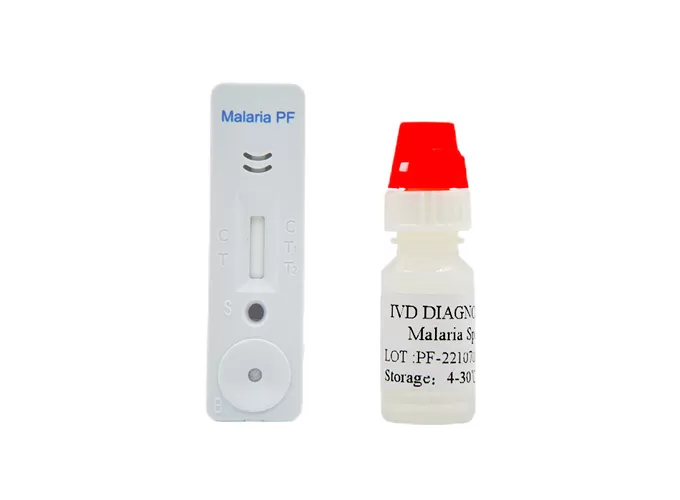
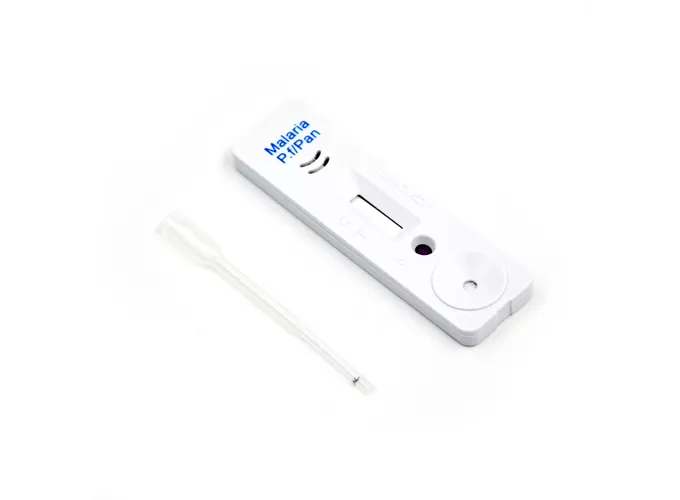
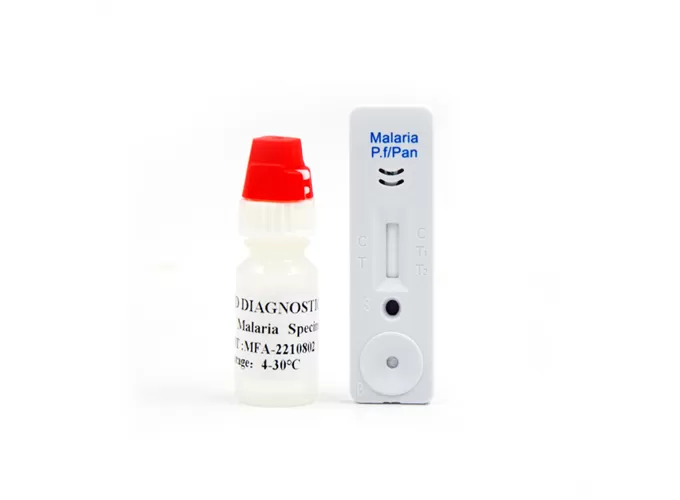
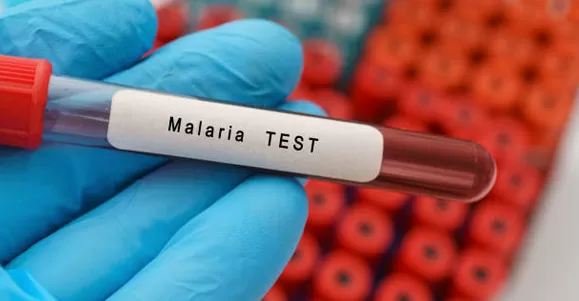
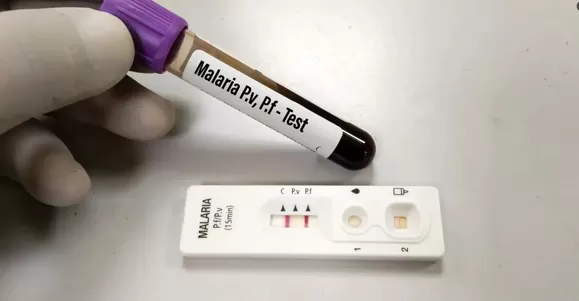
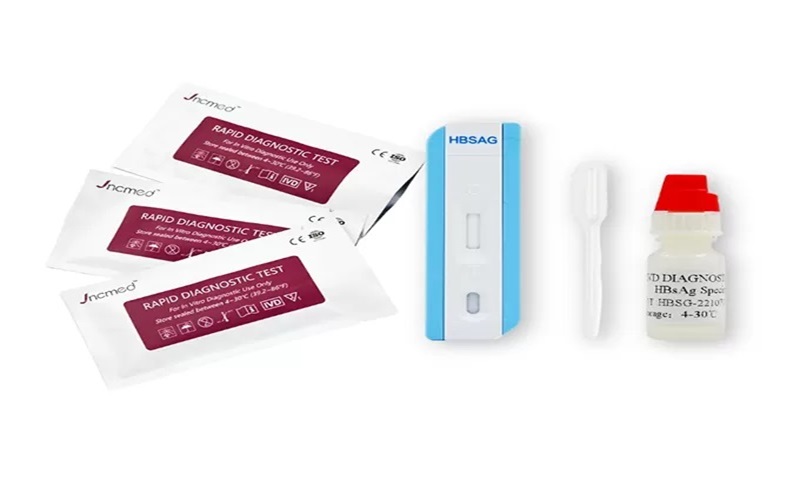
Malaria Rapid Test know that Malaria is one of the world most prevalent parasitic diseases and ranks third in the world major infectious diseases in terms of mortality. The protozoal parasites that cause malaria are from the Plasmodium genus. When using this Malaria Rapid Test, it is important to know that four species of Plasmodium protozoa cause malaria: Plasmodium falciparum, Plasmodium vivax, Plasmodium malariae and Plasmodium ovale. Transmitted principally by the Anopheles mosquito, malaria infections may also occur from contacting infected blood, such as from blood transfusions. P. falciparum accounts for the majority of infections and is the most lethal. P. vivax, P. malariae and P. orale cause a less severe form of malaria with intermittent fever which is usually neither debilitating nor fatal. Those who inquire about the Malaria Rapid Test are familiar with the classic symptoms of malaria: fever, headaches, chills, vomiting, shivering and convulsions. In some rare forms of falciparum malaria, chills and fever may be absent and the patient may present with delirium or coma; this fact alone shows why it is important to be familiar with how well these Malaria Rapid Tests work. Remission periods can last from a few weeks to several months. Severe anemia is often attributed to the cause of death from a malaria infection. This Malaria Rapid Test will differentiate between the two species:Plasmodium falciparum and fPlasmodium vivax.
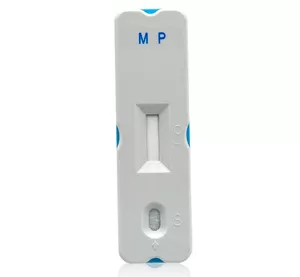
| Malaria Pf Ag Test | Whole Blood | Cassette | 25T |
| Malaria Pv Ag Test | Whole Blood | Cassette | 25T |
| Malaria Pan Ag Test | Whole Blood | Cassette | 25T |
| Malaria Pf/Pv Ag Test | Whole Blood | Cassette | 25T |
| Malaria Pf/Pan Ag Test | Whole Blood | Cassette | 25T |
| Malaria Test Principle: | Notable features of Malaria Rapid Test: |
| A rapid test for the qualitative detection of Malaria pf and pv antigen in human blood sample. The Malaria pf (HRP II) / pv (LDH) Antigen Test contains a membrane strip, which is pre-coated with two monoclonal antibodies as two separate lines across a test strip. One monoclonal antibody(test line 1) is specific to the P. falciparum histidine rich protein-2 (PfHRP-2) and another monoclonal antibody (test line 2) is specific to the lactate dehydrogenase of the P. vivax species (pvLDH). Conjugate pad is dispensed with monoclonal antibodies conjugated to colloidal gold, which are specific to P. falciparum histidine rich protein-2 (PfHRP-2) and specific to the lactate dehydrogenase of P. vivax. Therefore, the antigen of Plasmodium falciparum and Plasmodium vivax can be differentially detected. For additional details please refer to the instructions for use. | Reliable and inexpensive Convenient and easy-to-understand directions Clear preparation procedures Simple and safe specimen collection directions Comprehensive package of required materials and components Rapid and accurate test results |
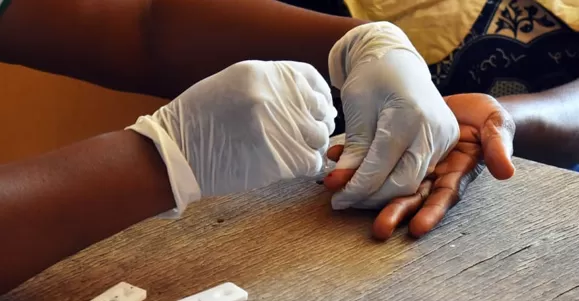
Rapid detection (15-20 mins) using finger-prick blood samples for field use in endemic areas.
High sensitivity (>95%) for Plasmodium falciparum and P. vivax common strains.
Dual-antigen tests detect HRP-2 (falciparum-specific) and pLDH (pan-malarial) proteins.
Minimal training required; visual interpretation via colored test lines.
Temperature-sensitive (storage at 2-30°C); humidity may affect test strips.
Follow-up PCR recommended for asymptomatic/equivocal results.

Allow the test device, specimen, buffer, and/or controls to equilibrate to room temperature (15-30°C) prior to testing.
1. Remove the test device from the foil pouch and use it as soon as possible. Best results will be obtained if the assay is performed within one hour.
2. Place the test device on a clean and level surface. Transfer the specimen by a pipette or a disposable specimen pipette:
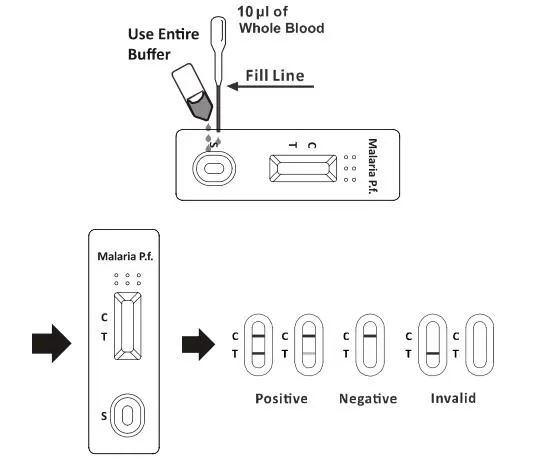
To use a Pipette: Transfer 5 μL of whole blood to Well-1 (W1) of the test device, then add 3~4 full drops of buffer to Well-2 (W2), and start the timer. (See illustration 1 below). Avoid trapping air bubbles in W1.
To use a Disposable Specimen Pipette: Hold the pipette vertically; draw the specimen up to the Fill Line as shown in illustration 1 below. Transfer the specimen to W1 of the test device, then add 3~4 full drops of buffer to W2 and start the timer. Avoid trapping air bubbles in W1.
3. Wait for the colored line(s) to appear. The result should be read at 15 minutes. Do not interpret the result after 20 minutes.


Healthcare Facilities
Public Health Agencies
Research & Academic Institutions
Non-Governmental Organizations (NGOs)
Occupational & Travel Medicine
Want to Get More Details About JCMED Medical Consumables?
We're waiting for your contact!