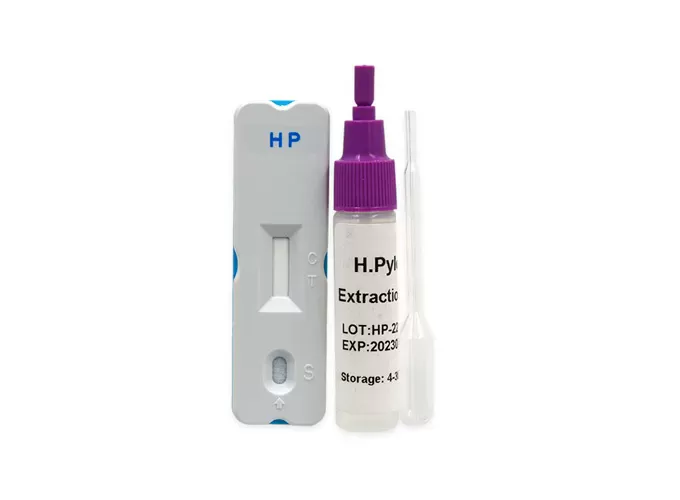
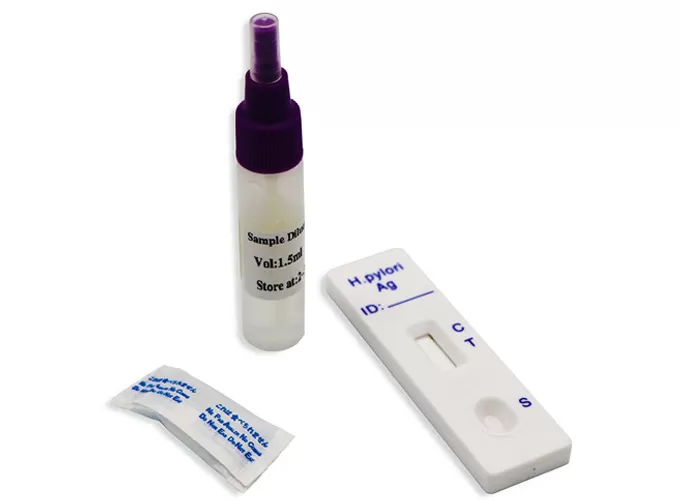
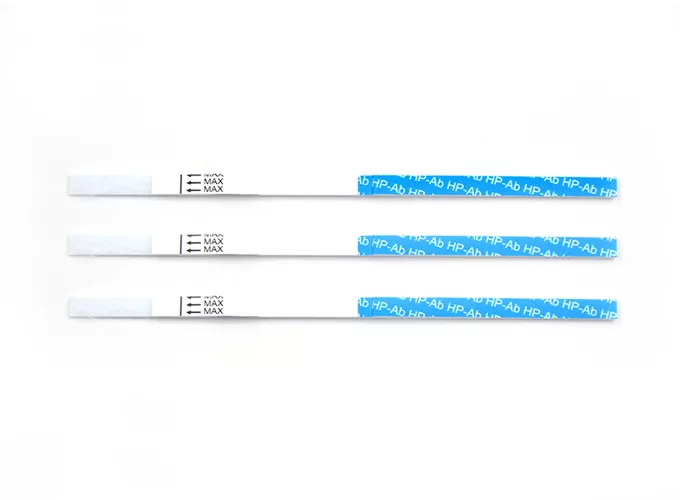
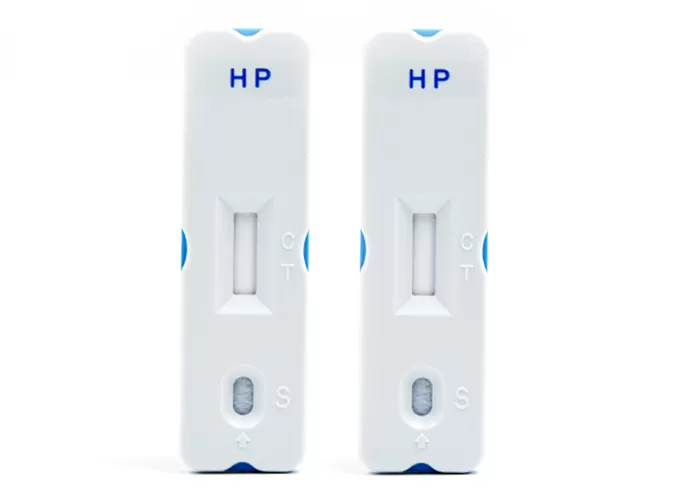
Specifications of H.Pylori Test
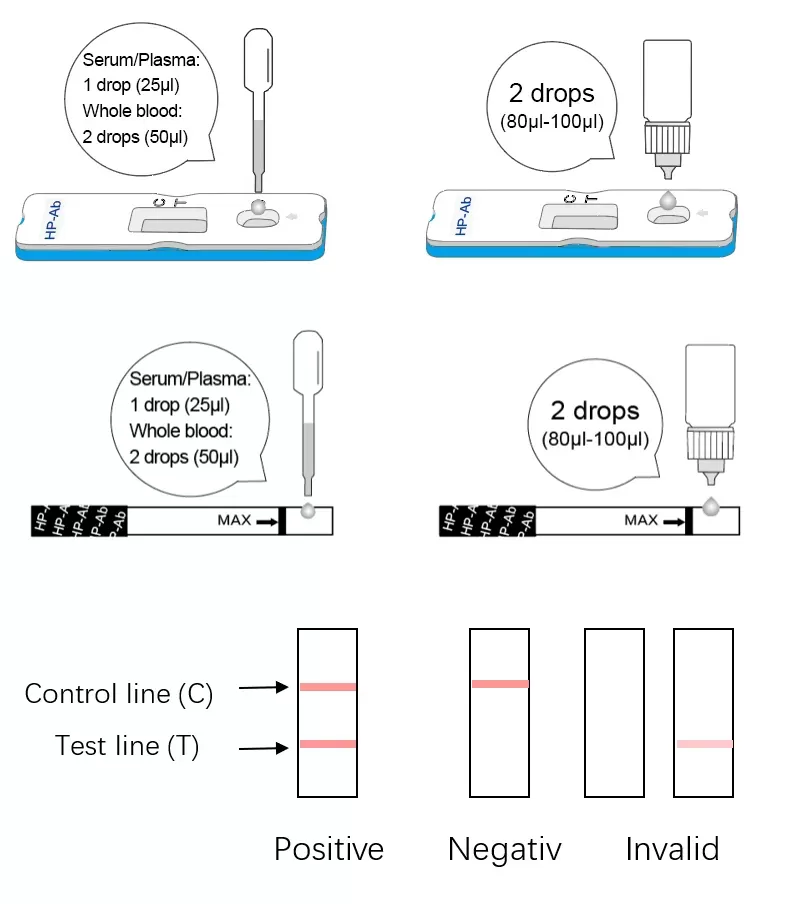
| H.Pylori Ab Test Strip | WB/S/P | Strip | 50T |
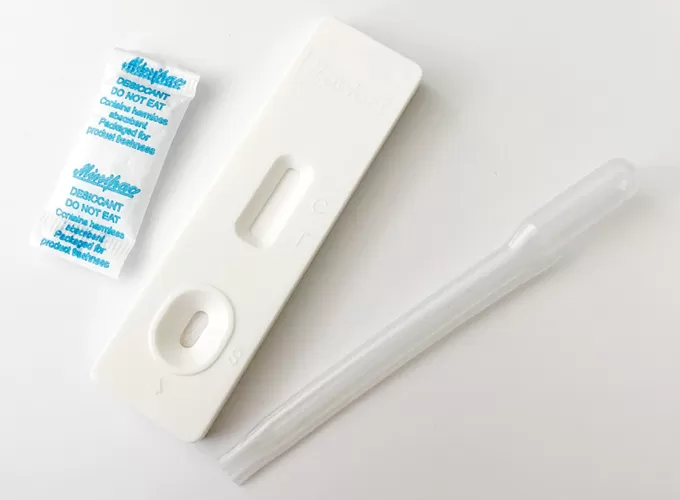
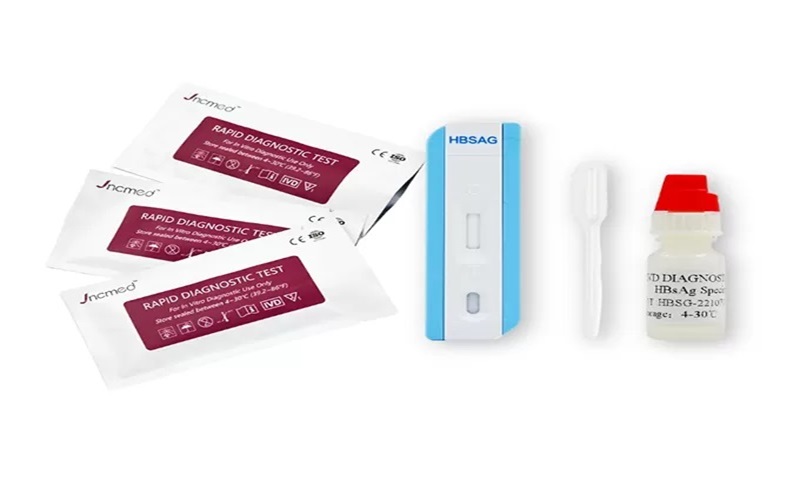
| H.Pylori Ab Test Cassette | WB/S/P | Cassette | 25T |
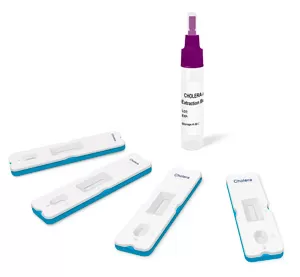
| H.Pylori Ag Test Cassette | Feces | Cassette | 20T |
There are different ways to test for an H. pylori infection. The most common tests use samples of your breath or stool. In certain cases, tests are done on a sample of tissue that's removed from inside your stomach.
H. pylori tests detect whether you have H. pylori infection — a major cause of stomach ulcers and peptic ulcer disease. Four tests can detect signs of the bacteria: breath (urea) tests, stool tests, blood tests and upper endoscopy tests. A positive test result means you'll need antibiotics to kill the bacteria and clear the infection.
What Happens During the Test?
H. pylori stool test: You'll collect a stool sample in a container your provider gives you. Follow your provider's instructions on where and when to drop it off for testing.
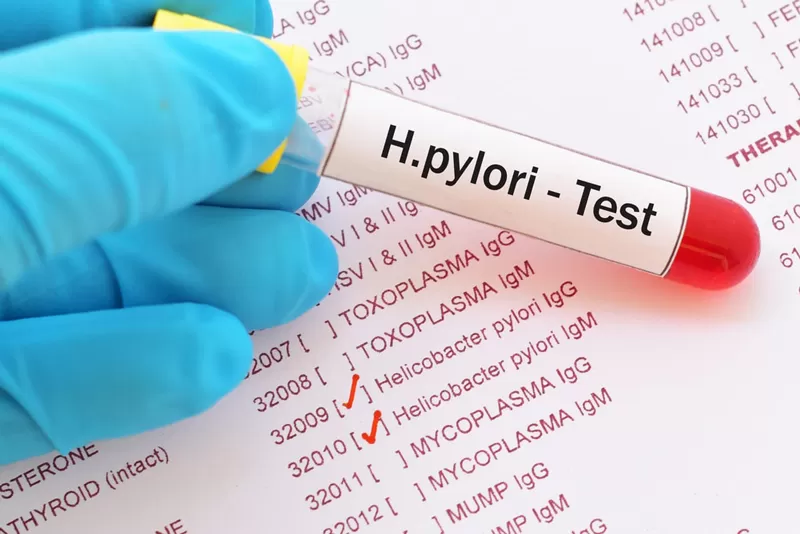
H. pylori blood test: A provider will collect a small sample of blood in a vial. The process will be the same as if you were having a routine blood test.
Upper endoscopy: You'll receive a sedative or anesthesia so you won't feel any pain. A provider will gently pass a thin scope with a camera from your mouth to your stomach or duodenum. The scope allows them to see and access the lining. They'll use tiny tools inside the scope to remove a tissue sample for testing.
What are the Tests for H. pylori?
There are four tests for H. pylori. They check your breath, stool (poop), blood or stomach/small intestine lining for signs of the bacteria.
H. pylori breath test (urea breath test)
An H. pylori breath test is the most common test for H. pylori. It measures the amount of carbon dioxide in your breath after you drink a special solution containing urea. H. pylori bacteria break down urea into carbon dioxide. Excess carbon dioxide in your breath is a sign of an H. pylori infection.
H. pylori stool test
An H. pylori stool antigen test (SAT) detects antigens associated with H. pylori in your poop. An antigen is a protein that's unique to a specific type of cell, virus or bacteria. They're markers that allow your immune system (your body's infection-fighting system) to identify germs. Having H. pylori antigens in your poop means you have the bacteria in your gut.
H. pylori blood test
An H. pylori blood test detects antibodies associated with an H. pylori infection. Antibodies are proteins your immune system makes if it detects a harmful antigen. The antibodies circulate in your bloodstream to find and destroy the offending germ (like H. pylori).
A downside of blood tests, compared to the others, is that they can't distinguish between active infections and a past infection that's already cleared. Antibodies can still circulate in your bloodstream after an infection is gone.
For this reason, providers mostly use blood tests to screen for H. pylori infections in populations where the bacteria are more common.
How is the Test Done?
Urea breath test
A breath sample is collected when you blow into a balloon or blow bubbles into a bottle of liquid. The health professional will:
Collect a sample of your breath before the test starts.
Give you a capsule or some water to swallow that contains tagged or radioactive material.
Collect more samples of your breath. The samples will be tested to see if they contain material formed when H. pylori comes into contact with the tagged or radioactive material.
Stool antigen test
For this test, you may be asked to collect the stool sample at home. To collect the sample, you need to:
Pass stool into a dry container. Either solid or liquid stools can be collected. Be careful not to get urine or toilet tissue in with the stool sample.
Replace the container cap. Label the container with your name, your doctor's name, and the date the sample was collected.
Wash your hands well after you collect the sample.
Take the sealed container to your doctor's office or to the lab as soon as you can.