

Cholera is one of the world's most significant diarrhoeal diseases and remains a major global public health threat, particularly in settings with limited access to safe water, basic sanitation, and hygiene. The disease is caused by the bacterium Vibrio cholerae, of which only two serogroups, O1 and O139, are known to cause outbreaks. Transmission occurs primarily through the ingestion of food or water contaminated with the faeces of an infected person. While most infected individuals develop no or mild symptoms, a minority can develop severe acute watery diarrhoea, often described as "rice-water stools," which can lead to life-threatening dehydration and death within hours if untreated . Those who inquire about the Cholera Rapid Test are familiar with the classic symptoms of cholera: profuse watery diarrhoea, vomiting, and leg cramps. In severe cases, rapid loss of body fluids can result in dehydration, shock, and death. This fact alone shows why it is important to be familiar with how well these Cholera Rapid Tests work. This Cholera Rapid Test will detect Vibrio cholerae O1/O139 antigens in human fecal specimens.
| Cholera Test | |||
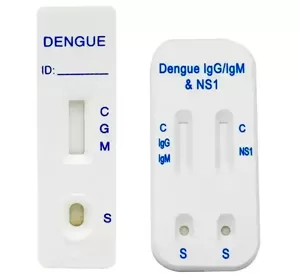
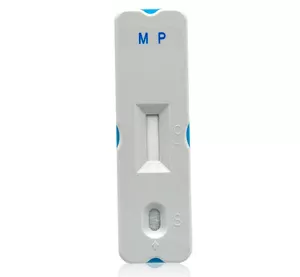
| Cholera Ag O1 Rapid Test Cassette | Feces | Cassette | 20T |
| Cholera Ag O139 Rapid Test Cassette | Feces | Cassette | 20T |
Cholera Test Principle
The Cholera Ag Test is a rapid immunochromatographic assay for the qualitative detection of Vibrio cholerae O1/O139 antigen in human fecal specimens. The Cholera O1/O139 Antigen Rapid Test Kit is a qualitative cassette-based colloidal gold-based lateral flow immunochromatographic assay. The test device contains a membrane strip pre-coated with monoclonal antibodies against Vibrio cholerae O1/O139 antigen to form the test line(s). During testing, the specimen reacts with colloidal gold-conjugated monoclonal antibodies specific to Vibrio cholerae O1/O139 antigen. The mixture then migrates chromatographically along the membrane by capillary action. If the specimen contains Vibrio cholerae O1/O139 antigen, it will bind to the colloidal gold-conjugated antibodies, and the resulting complex will be captured by the pre-coated monoclonal antibodies on the membrane, forming a visible colored line in the test zone. The presence of a colored line indicates a positive result, while its absence indicates a negative result. A control line serves as a procedural control to verify that sufficient specimen volume has been added and that capillary action has occurred properly. For more detailed information, please refer to the Instruction for Use.
Key features of the Cholera Ag Test:
Reliable and cost-effective
Easy to use, convenient and clean test
Clear and easy-to-follow instructions
Test result available in 15 min
Specimen: Solid fecal specimens (about 50 mg) or liquid fecal specimens (about 300 μl)
Stable for 24 months at 1-30°C
High sensitivity: 100% (O1), 100% (O139) (vs. Culture)
High specificity: 100% (O1), 100% (O139) (vs. Culture)
【INTENDED USE】
Cholerae O1/O139 Ag Combo Rapid Test (feces) is a rapid chromatographic immunoassay for the qualitative detection of Vibrio Cholera O1 and O139 in feces.
【REAGENTS】
The test cassette contains Vibrio Cholera O1 and O139 antibodies conjugated colloid gold and Vibrio Cholera O1 and O139 antibodies coated on the membrane and the phosphate buffer solution.
【DIRECTIONS FOR USE】
Allow test cassette, specimen, and/or controls to equilibrate to room temperature (15-30°C) prior to testing.
1. Unscrew the cap of the specimen collection tube, then randomly stab the specimen collection applicator into the fecal specimen in at least 3 different sites. Do not scoop the fecal specimen.
2. Screw on and tighten the cap onto the specimen collection tube, then shake the specimen collection tube vigorously to mix the specimen and the extraction buffer. Specimens prepared in the specimen collection tube may be stored for 6 months at -20°C if not tested within 1 hour after preparation.
3. Hold the specimen collection tube upright and open the cap onto the specimen collection tube. invert the specimen collection tube and transfer 2 full drops of the extracted specimen (approximately 80μ L) to the specimen well (S) of the test cassette, then start the timer. Avoid trapping air bubbles in the specimen well (S). See illustration below.
4. Read the results within 15 minutes. Note: strong specimens may produce positive results in as little time as 1 minute. Confirm negatives in 15-30 minutes.

Suitable Use Scenarios for the Cholera Rapid Test Cassette
Cholera outbreak investigation
Field surveillance in endemic areas
Epidemic preparedness and early warning
Emergency and humanitarian settings
Clinical triage at peripheral health facilities
Point-of-care testing in clinics and hospitals
Cross-border and port health screening
Water-borne disease surveillance programmes
Community health worker deployment
Research and epidemiological studies
Want to Get More Details About JCMED Medical Consumables?
We're waiting for your contact!