When procurement teams issue RFQs for paraffin gauze across multiple markets, one of the first friction points they encounter is not a product problem—it is a naming problem. The same functional dressing is called "paraffin gauze" in the United Kingdom, Australia, and much of Europe; "Vaseline gauze" or "petrolatum gauze" in North America and parts of Asia; and various combinations of both in tender documents, hospital formularies, and distributor catalogs worldwide. For buyers managing paraffin gauze uses across different clinical and distribution channels, this terminology gap creates real operational risk.
In 2026, that risk has become more expensive than it was in previous years. Cross-border sourcing volumes are higher, multi-market labeling and tender compliance requirements are tighter, and the cost of a misquoted specification—wrong item ordered, wrong label submitted, approval delayed—has increased proportionally. Buyers report receiving supplier quotes for the wrong product because the RFQ used one regional term and the supplier interpreted it through a different regional lens. Others have experienced tender rejections because the product documentation used "petrolatum" where the tender specified "paraffin," even though the underlying product was functionally identical.
The two compounding pain points that make this worse: some low-cost products have uneven impregnation—petrolatum or paraffin not distributed uniformly across the gauze surface, leaving dry zones that compromise non-adherent performance—and some products suffer from poor package sealing that allows the dressing to dry out during storage or transit. Both failures are independent of the naming question, but they are frequently encountered together in low-cost sourcing scenarios where neither the product specification nor the terminology has been properly validated.
The solution is not to memorize every regional naming convention. It is to understand that "paraffin gauze" and "Vaseline gauze" describe the same functional intent—a gauze substrate impregnated with a hydrophobic, non-adherent ointment base—and to source by verifiable performance specifications rather than by label terminology alone. This guide provides that framework.
Paraffin Gauze Terminology 101: What Buyers Actually Mean Across Regions
The Practical Definition for Procurement
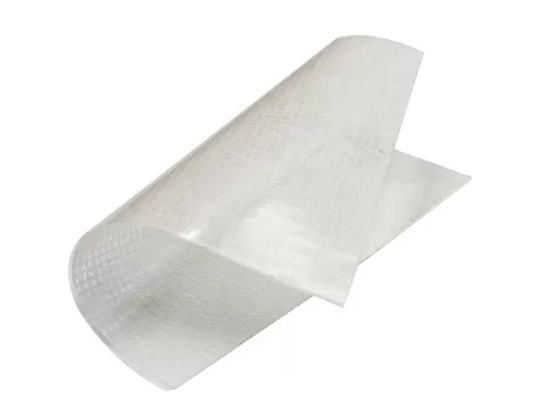
In sourcing terms, paraffin gauze is a wound-contact dressing consisting of an open-weave gauze substrate impregnated with a hydrophobic, semi-occlusive ointment base. Its primary function is to serve as a non-adherent interface layer between the wound surface and the secondary dressing, reducing the risk of the dressing bonding to healing tissue and supporting atraumatic removal during dressing changes.
That functional definition holds regardless of whether the product is labeled "paraffin gauze," "Vaseline gauze," "petrolatum gauze," or any regional variant. The gauze is the substrate. The impregnant is the functional agent. The non-adherent interface is the clinical output. Procurement teams who anchor their specifications to this functional definition—rather than to a specific regional term—will encounter significantly less friction across multi-market sourcing workflows.
Chemical and Functional Similarity: Paraffin vs. Vaseline/Petrolatum
The reason the two terms are functionally interchangeable comes down to chemistry. Both paraffin and petrolatum (the generic name for Vaseline) are hydrophobic, semi-occlusive, non-adherent bases derived from petroleum refining. Both are used in wound dressing impregnation because they create a low-adherence surface that does not bond to moist wound tissue, do not significantly absorb wound exudate, and are chemically stable across standard storage conditions.
The practical differences between paraffin and petrolatum as impregnants are minor from a clinical performance standpoint. Paraffin tends to have a slightly firmer consistency at room temperature; petrolatum is typically softer and more ointment-like. Both achieve the same functional outcome when uniformly applied to a gauze substrate: a consistent, non-adherent wound-contact layer that supports predictable dressing removal.
The key buyer takeaway: the performance of a paraffin gauze or Vaseline gauze dressing depends far more on impregnation uniformity, packaging integrity, and sterilization quality than on whether the impregnant is labeled paraffin or petrolatum. A well-manufactured product using either base will outperform a poorly manufactured product using the other. Sourcing decisions should be driven by measurable quality specifications, not by impregnant terminology.
Paraffin Gauze Uses: How the Non-Adherent Base Works and What to Standardize
Mechanism: What It Does and Why It Is Specified
The functional mechanism is straightforward. When the impregnated dressing is placed in contact with a wound surface, the hydrophobic ointment base creates a physical barrier between the gauze fibers and the wound tissue. This barrier prevents the gauze from bonding to the wound bed as exudate dries—the primary cause of adherence and tissue disruption during removal with plain gauze.
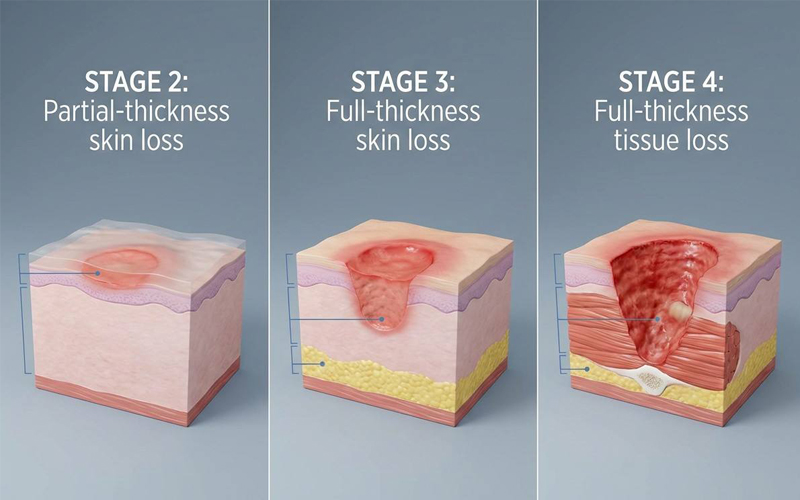
The result is a dressing that can be removed cleanly and with minimal trauma, even after extended wear periods. For wound types where tissue integrity is fragile—burns, donor sites, post-operative incisions, superficial abrasions—this non-adherent property is the primary clinical reason the product is specified. The consistency of that non-adherent interface across the full dressing surface is what determines whether the product performs as intended in practice.
What to Standardize Regardless of Regional Wording
Whether a buyer's tender or formulary uses "paraffin gauze" or "Vaseline gauze," the functional requirements that should be locked into the specification are the same:
Non-adherence consistency: uniform impregnation across the full dressing surface, with no dry zones that could adhere to wound tissue
Sterile presentation: validated sterilization (Gamma Ray or EO) with full documentation, where clinical use requires it
Shelf stability: packaging that maintains the impregnation level from manufacture to point of use, without dry-out during storage or transit
These three requirements are measurable, documentable, and supplier-verifiable—and they are entirely independent of regional naming conventions.
Key Specifications and Configurations That Prove Universal Compatibility
Impregnation Uniformity: The Real-World Differentiator
Across all regional naming conventions and all clinical applications, impregnation uniformity is the single most important manufacturing quality variable. A dressing with uneven petrolatum or paraffin distribution—dry zones in some areas, over-concentration in others—will not perform consistently, regardless of what it is called on the label.
For procurement and incoming QC purposes, the acceptance criteria for impregnation uniformity should include:
Visual inspection: the full dressing surface should appear consistently translucent and moist, with no white or dry-looking areas at corners, edges, or center
Hand-feel check: uniform, low-drag sensation across the entire sheet with no patchy or rough areas
Multi-batch sampling: evaluate samples from at least two or three separate production batches to assess consistency over time, not just in a single sample
Supplier QC documentation: request a description of the in-process saturation controls used to maintain batch-to-batch consistency; a credible manufacturer should be able to explain how they monitor petrolatum content per unit area and what their batch acceptance criteria are
Packaging Barrier and Seal Integrity: Surviving Global Logistics
For products moving through international distribution chains—multiple transit legs, variable humidity and temperature conditions, extended warehousing periods—packaging barrier performance is a critical specification variable. A well-impregnated dressing that dries out in transit due to inadequate packaging is a failed product, regardless of its manufacturing quality.
The specification standard that reliably prevents dry-out is an aluminum foil laminate pouch with validated heat sealing. Aluminum foil provides near-zero moisture vapor and oxygen transmission rates, protecting the impregnant from both evaporation and oxidation across the full stated shelf life. When issuing RFQs for global distribution applications, specify:
Aluminum foil laminate pouch material (not plain paper or low-barrier film)
Seal integrity verification method and acceptance criterion from the supplier
Shelf-life claim supported by accelerated aging or real-time stability data, not just a marketing assertion
Outer carton protection adequate for multi-leg international transit and humidity cycling
Sterilization Method Options: Gamma Ray and EO
Both Gamma Ray irradiation and Ethylene Oxide (EO) sterilization are accepted methods for sterile wound dressings and are compatible with paraffin and petrolatum-impregnated gauze products. The choice between them should be driven by channel requirements and regulatory environment.
For any sterilization claim, buyers should request: sterilization validation documentation (ISO 11137 for Gamma; ISO 11135 for EO), a Certificate of Analysis (COA) with sterility assurance level stated per lot, lot-level traceability records, and labeling that clearly identifies the sterilization method and expiry date in a format compatible with the target market's regulatory requirements.
Paraffin Gauze Uses by Scenario: Choosing the Right Format for Your Market
Scenario Mapping: Matching Specification Priority to Channel
The three quality specifications described above apply universally, but their relative priority and documentation requirements shift depending on the application context and market channel:
Hospitals and surgical clinics sourcing for direct clinical use prioritize sterile presentation and consistent non-adherent performance. Batch-to-batch impregnation consistency is critical because clinical protocols depend on predictable dressing behavior. Full sterilization documentation—COA, validation references, lot traceability—is typically required for formulary approval or tender submission.
Distributors and importers managing inventory across multiple locations and customer types prioritize shelf-life stability and packaging robustness. The primary risk in distribution is dry-out during warehousing or transit, which generates returns and complaints that are disproportionately expensive to handle relative to the unit cost of the dressing. Aluminum foil pouching with validated sealing is the specification that most directly reduces this risk.
Private label and brand owners serving multiple markets face the additional challenge of terminology alignment across product documentation. A product manufactured to a single performance specification may need to be labeled "paraffin gauze" for European markets, "Vaseline gauze" for North American distribution, and "petrolatum gauze" for certain Asian channels—all while maintaining identical underlying quality standards.
Regional Terminology Note: Aligning Pack Copy to Market Language
The practical sourcing reality in 2026 is that regional naming preferences are real and consequential for tender submissions, regulatory filings, and distributor acceptance—even when the underlying product is functionally identical. Some markets and tender systems will not accept a product labeled with the "wrong" regional term, regardless of how clearly the functional equivalence is documented.
The recommended approach is to separate the product specification from the labeling strategy. Hold the same performance specifications—uniform impregnation, aluminum foil packaging, validated sterilization—across all markets, and align the pack copy and documentation language to the regional preference of each target market. A supplier who can support multi-market labeling from a single product platform significantly reduces the complexity and cost of this process.
Selection Guide for Global RFQs: A 5-Step Workflow to Avoid Spec Mismatch
Step 1: Confirm Market and Channel Requirements
Before issuing an RFQ, define the end market and channel: clinical use in a regulated hospital environment, retail or pharmacy distribution, export to a specific country with known regulatory requirements, or tender supply with defined documentation standards. This determines which sterilization documentation package is required and whether specific labeling language is mandated.
Step 2: Decide Naming and Label Strategy
Based on the target market, determine whether the product should be labeled "paraffin gauze," "Vaseline gauze," "petrolatum gauze," or another regional variant. Confirm with the supplier that the labeling can be adapted to the target market's language and regulatory format without changing the underlying product specification.
Step 3: Lock Sterility Requirement and Documentation
Specify Gamma Ray or EO sterilization based on channel requirements. Request the full documentation package—validation references, COA format, lot traceability structure—before placing the first order, not after.
Step 4: Choose Size, Specification, and Unit Packaging
Confirm available dressing sizes against your usage requirements. Specify individual aluminum foil pouch format, units per box, and cartons per pallet for logistics planning. Confirm that stated dimensions match actual product dimensions—a common source of specification mismatch in cross-border sourcing.
Step 5: Approve with Multi-Batch Samples and Incoming QC Criteria
Request samples from a minimum of two separate production batches for visual and hand-feel inspection before committing to volume orders. Establish incoming QC criteria in writing—impregnation uniformity, seal integrity, labeling accuracy—so that acceptance decisions are based on documented criteria rather than subjective judgment.
What to Request from a Supplier to Prove Equivalency
To verify that a supplier's product meets the functional requirements regardless of regional naming, request: multi-batch samples with batch numbers identified, packaging material specification sheet confirming foil laminate construction, sterilization validation documentation and sample COA, written description of in-process saturation uniformity controls, and confirmation of available labeling options for the target market.
Maintenance, Storage, and TCO: Why Terminology Mistakes Cost More Than You Think
Hidden Costs Caused by Name Confusion
Terminology mismatches in procurement are not just administrative inconveniences—they generate real, quantifiable costs:
Wrong item ordered: A supplier who interprets "paraffin gauze" as a different product formulation than intended may ship a product that fails incoming inspection or tender review, triggering return shipping, re-ordering delays, and potential supply gaps.
Relabeling and re-registration costs: If a product arrives with the wrong regional terminology on the label, correcting it may require relabeling, re-submission to regulatory authorities, or in some cases re-registration—all of which carry direct costs and time delays.
Tender rejection: In regulated procurement environments, a documentation package that uses inconsistent terminology—"petrolatum" in the COA, "paraffin" in the tender submission—can trigger a rejection even when the product is functionally compliant.
Dry-out waste and returns: Inadequate packaging specification generates a predictable stream of unusable units and complaint-handling costs that accumulate quickly at distribution scale.
How Better Specification Discipline Lowers TCO
The TCO reduction from standardizing on measurable, terminology-independent specifications is realized across multiple cost categories. Fewer misorders reduce return and re-purchasing costs. Consistent aluminum foil packaging reduces dry-out write-offs. Validated sterilization documentation reduces tender rejection risk. Multi-market labeling flexibility from a single product platform reduces relabeling and re-registration costs.
For procurement teams managing paraffin gauze or Vaseline gauze across multiple markets, the investment in specification discipline at the sourcing stage is recovered through avoided costs across the full supply chain lifecycle.
Conclusion: One Function, Many Names — Buy by Specs, Not Labels
The core message of this guide is straightforward: "paraffin gauze" and "Vaseline gauze" are regional names for the same functional product. Both describe a gauze substrate impregnated with a hydrophobic, non-adherent ointment base designed to create a consistent, atraumatic wound-contact interface. The chemistry is similar, the clinical function is equivalent, and the performance variables that actually determine product quality—impregnation uniformity, packaging barrier integrity, and sterilization documentation—are identical regardless of which regional term appears on the label.
In 2026, the buyers who source most efficiently across global markets are those who have separated the naming question from the specification question. They confirm the regional label requirement for each target market, then hold the same measurable quality standards across all of them: uniform impregnation with no dry zones, aluminum foil pouch sealing that protects shelf stability through the full distribution chain, and validated Gamma Ray or EO sterilization with complete documentation.
That framework eliminates the two most common and costly sourcing failures—specification mismatch from terminology confusion, and product failure from inadequate packaging—before they reach the warehouse or the tender review committee.
Request a Recommended Configuration and Quote
Visit the product page to review available specifications, sizes, sterilization options, and labeling configurations. For a real-world application reference showing how these specifications translate into field performance across a multi-channel distribution workflow, view the Colombian customer use-case here.
To receive a configuration recommendation and pricing tailored to your specific market and channel requirements, submit the following:
Application scenario / working condition (wound type, clinical setting, distribution channel, export destination, or tender context)
Quantity (annual volume or per-order quantity)
Size or specifications (dressing dimensions, packaging format, units per box)
Target metrics (shelf-life expectation, sterilization requirement, tender compliance, labeling language)
Current issues (terminology mismatch, approval delays, dry-out complaints, uneven impregnation, sterilization documentation gaps, or other)
FAQ
1. What is paraffin gauze?
Paraffin gauze is a wound-contact dressing made by impregnating an open-weave gauze substrate with paraffin or a paraffin-based ointment blend. The impregnated layer creates a non-adherent surface that reduces the risk of the dressing bonding to wound tissue, supporting cleaner and less traumatic removal during dressing changes. It is widely used as a primary wound-contact interface layer in surgical, burn, donor site, and general wound care applications, typically placed directly on the wound surface beneath an absorbent secondary dressing. In procurement terms, it is specified by impregnation uniformity, packaging format, sterilization method, and dressing size—not by the specific regional name used on the label.
2. Paraffin gauze vs. Vaseline (petrolatum) gauze — are they interchangeable?
For most clinical and procurement purposes, yes. Both paraffin and petrolatum (Vaseline) are hydrophobic, semi-occlusive, non-adherent bases derived from petroleum refining. Both create the same functional outcome when uniformly applied to a gauze substrate: a consistent, non-adherent wound-contact layer that reduces adherence and supports atraumatic dressing removal. The regional naming difference reflects historical and market convention rather than a meaningful clinical distinction. The practical buyer guidance is to confirm the regional label requirement for the target market, then evaluate the product on measurable quality specifications—impregnation uniformity, packaging integrity, sterilization documentation—rather than on which term appears on the label.
3. What is the ROI or payback of standardizing paraffin gauze specifications for global sourcing?
The payback is realized across several cost categories. Fewer specification mismatches from terminology confusion reduce return shipping, re-ordering, and supply gap costs. Consistent aluminum foil packaging specifications reduce dry-out write-offs and complaint-handling costs. Validated sterilization documentation reduces tender rejection risk and re-submission costs. Multi-market labeling flexibility from a single product platform reduces relabeling and re-registration costs. For high-volume buyers sourcing across multiple markets, even a modest reduction in misorder rates and complaint volumes typically offsets any additional specification effort within the first one or two procurement cycles.
4. Do we need to modify our workflow or packaging process to switch suppliers?
In most cases, no significant workflow modification is required. The primary alignment steps are: confirming that the new supplier's available sizes match current usage specifications; verifying that the pouching format and carton pack configuration are compatible with existing dispensing or distribution processes; ensuring that the sterilization method and labeling format meet institutional, tender, or regulatory requirements for each target market; and confirming any language-specific or market-specific labeling requirements before the first shipment. If multi-market labeling is required, address the label variants during supplier qualification rather than after the first order is placed.
5. What parameters should we provide for accurate product selection?
To receive a configuration recommendation that accurately reflects your requirements, provide the following: your intended application or use case (wound type, clinical setting, distribution channel, or export destination); target market or registration environment (which regional terminology and regulatory framework applies); sterilization preference (Gamma Ray or EO); required dressing sizes (dimensions in centimeters); preferred packaging format (individual pouch, units per box, cartons per pallet); annual or per-order volume; target shelf life; and a description of any current problems—such as terminology mismatches in tender submissions, approval delays, dry-out complaints, uneven impregnation reports, or sterilization documentation gaps. The more specific the input, the more precisely a supplier can match configuration, labeling, and pricing to your actual procurement requirements.