Paraffin gauze remains a staple primary contact layer in many facilities because it is simple, widely available, and cost-efficient — especially when protocols require frequent dressing changes. But as wound care standards evolve, procurement teams are increasingly comparing it to silicone contact layers and silicone foam dressings for reduced pain, lower trauma at removal, and longer wear time. This guide explains key paraffin gauze uses, when silicone dressings may deliver better outcomes, and how to build a purchasing decision that balances budget with clinical performance.
Paraffin Gauze Uses: What It Is Designed to Do
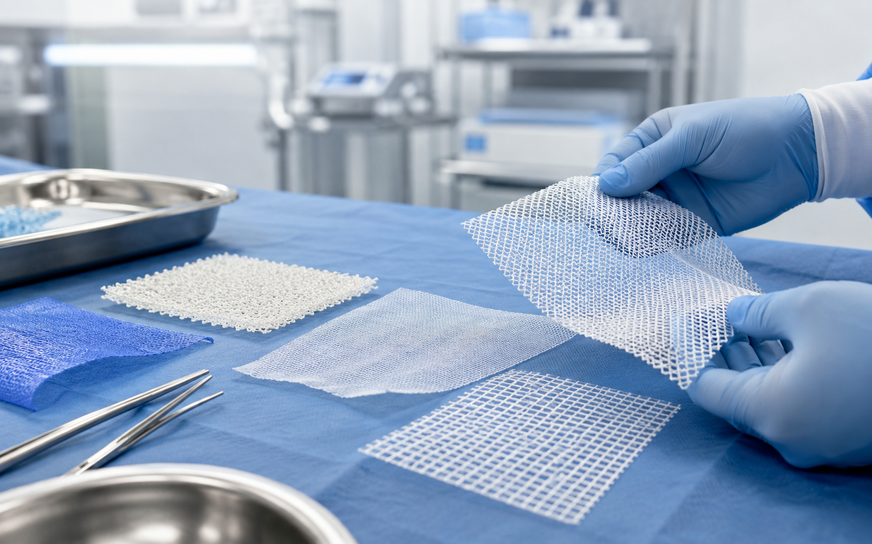
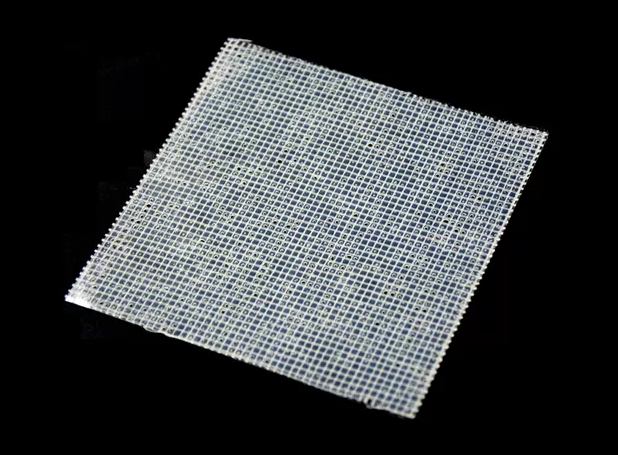
Paraffin gauze is a low-adherence primary contact dressing consisting of an open-weave gauze fabric impregnated with soft white paraffin (petroleum jelly). The paraffin coating reduces direct contact between the wound surface and the gauze fibers, making removal less traumatic than unimpregnated gauze under most conditions.
Common Paraffin Gauze Uses
| Clinical Application | Why Paraffin Gauze Is Used | Protocol Notes |
|---|
| Minor burns (superficial partial thickness) | Non-adherent contact layer; protects fragile epithelium | Pair with absorbent secondary dressing; change per exudate level |
| Skin graft donor sites | Gentle contact layer over a sensitive, bleeding surface | Protocol-dependent; confirm with surgical team |
| Skin graft recipient sites | Protects newly applied graft from dressing trauma | Typically secured with tie-over or secondary dressing |
| Abrasions and lacerations | Low-cost non-adherent layer for straightforward wounds | Suitable where frequent change is anticipated |
| Post-operative wound surface | Primary contact where adherence prevention is the goal | Secondary dressing determines overall absorbency |
Key Limitations to Understand Before Buying
Paraffin gauze has limited inherent absorbency. The paraffin impregnation helps prevent adherence, but it does not manage exudate on its own. A secondary absorbent pad is almost always required. In wounds with heavy or changing exudate, if the secondary dressing becomes saturated and is not changed promptly, the paraffin gauze can dry at the wound interface and adhere — partially defeating its primary purpose.
This limitation is not a reason to avoid the product. It is a reason to match it correctly to wound type, exudate level, and available change frequency.
Paraffin Gauze vs. Silicone Dressings: Removal Trauma, Pain, and Wear Time
The clinical comparison between paraffin gauze and silicone dressings comes down to three variables: how reliably each stays non-adherent, how much pain occurs at removal, and how long each can remain in place before requiring a change.
Head-to-Head Comparison
| Factor | Paraffin Gauze | Silicone Contact Layer / Foam |
|---|
| Adherence mechanism | Paraffin coating reduces but does not eliminate adherence | Silicone layer designed to not bond to wound tissue |
| Reliability of non-adherence | Good under moist conditions; can adhere if wound dries | Consistent across a wider range of wound conditions |
| Pain at removal | Low to moderate — better than plain gauze, variable vs silicone | Generally lower — key advantage in pain-sensitive patients |
| Absorbency | Low — secondary dressing required | Silicone foam absorbs; silicone contact layer still needs secondary |
| Wear time | Typically 1–3 days depending on exudate | Often 3–7 days for appropriate wounds — product dependent |
| Unit cost | Low | Higher — typically 3–10x paraffin gauze unit price |
The Cost-Per-Episode Logic
The unit price comparison is straightforward — paraffin gauze costs less per piece. The cost-per-healed-wound comparison is more complex. If a silicone dressing can be changed every five days versus paraffin gauze every two days, the nursing time, consumable volume, and patient discomfort per treatment episode may favor the higher-cost product on a total cost basis.
This is the calculation procurement teams should run for high-usage indications — not just the line-item price comparison.
Paraffin Gauze Uses in Modern Protocols: When It Is the Best Value Choice
Despite the growth of advanced dressing options, paraffin gauze remains the right clinical and economic choice in several well-defined scenarios.
When Paraffin Gauze Delivers Best Value
| Scenario | Why Paraffin Gauze Fits |
|---|
| High-volume basic wound care with routine frequent changes | Low unit cost; simple workflow; no learning curve |
| Low-to-moderate exudate wounds in otherwise healthy patients | Non-adherence function is reliable; secondary dressing manages fluid |
| Facilities with broad access requirements and simple training needs | No complex application or removal technique required |
| Short-duration post-operative wound coverage | Cost-appropriate for wounds expected to heal quickly |
| Pediatric abrasions and minor burns in outpatient settings | Gentle, well-tolerated, and inexpensive for high-turnover presentations |
How to Standardize Paraffin Gauze Procurement
A consistent formulary approach reduces waste and ensures clinical familiarity:
Size range: 5x5 cm for small wounds, 10x10 cm as standard, 10x30 cm or larger for burns and donor sites
Sterile individual packs for clinical use; confirm pouch seal integrity on delivery
Shelf life minimum 24 months remaining at delivery for high-volume orders
Compatibility confirmed with any topical antiseptics applied to the wound before dressing placement
Secondary dressing specified in the protocol — do not allow paraffin gauze to be used without one
Paraffin Gauze Procurement Checklist: Specs, Sterility, and Quality Consistency
Procurement quality determines whether the clinical performance matches the specification. The most common field complaints about paraffin gauze — adherence, lint shedding, inconsistent impregnation — are all preventable through clear purchasing requirements.
Technical Specification Checklist
| Specification | What to Define | Why It Matters |
|---|
| Gauze mesh count | Open weave confirmed (typically 16×12 or similar) | Coarse mesh allows exudate to pass to secondary dressing |
| Paraffin load | Consistent impregnation weight per unit area | Uneven loading causes dry patches that adhere to wound |
| Edge finishing | Hemmed or heat-sealed edges; no loose fiber ends | Fiber shedding into a wound is a clinical safety issue |
| Paraffin type | White soft paraffin (BP or USP grade) | Confirms pharmaceutical-grade material, not industrial grade |
| Pack format | Individual sterile peel-pack | Clinical sterility assurance; reduces waste |
| Bulk pack option | Confirm sterile barrier integrity for bulk formats | Used in some high-volume ward settings |
QC Acceptance Points for Incoming Goods
| Check | Accept Criteria |
|---|
| Visual impregnation | Even paraffin coverage; no dry patches visible on gauze surface |
| Odor | No rancid or chemical odor — off-odor indicates degradation or contamination |
| Color | White to off-white; yellow discoloration may indicate oxidation |
| Pouch integrity | No broken seals; no visible moisture inside packaging |
| Dimensional accuracy | Within plus or minus 5 mm of stated size |
| Labeling | Lot number, expiry date, sterility statement, IFU reference — all present |
Documentation to Request from Suppliers
Certificate of Analysis (COA) per batch confirming material specification
ISO 13485 quality management certification
CE marking documentation or equivalent for target market
Sterilization validation records (EO or gamma irradiation — confirm method)
Paraffin Gauze vs. Silicone Dressings: Practical Buyer Decision Matrix
The goal of a tiered formulary is to use the most cost-appropriate product for each indication — not the most advanced product for every wound.
Decision Matrix
| Wound Type | Exudate Level | Change Frequency Available | Pain Sensitivity | Recommended Choice |
|---|
| Minor burn (superficial) | Low to moderate | Daily or every 2 days | Standard | Paraffin gauze + secondary |
| Minor burn (partial thickness, fragile) | Moderate | Every 3–5 days preferred | High | Silicone contact layer or silicone foam |
| Skin graft donor site | Moderate to heavy initially | Daily early phase | High | Paraffin gauze early; consider silicone as healing progresses |
| Post-operative clean wound | Low | Every 2–3 days | Standard | Paraffin gauze |
| Abrasion or laceration | Low | Every 1–2 days | Standard | Paraffin gauze |
| Chronic wound with fragile periwound skin | Low to moderate | Every 3–5 days | High | Silicone foam or silicone border dressing |
| Pediatric wound, outpatient | Low | Every 1–2 days | High | Paraffin gauze for short-duration; silicone if pain is a concern |
Suggested Procurement Strategy
Maintain paraffin gauze as the baseline primary contact layer SKU across standard wound care indications — it covers the highest volume at the lowest cost per unit. Add silicone dressings as a defined premium tier for:
Pain-sensitive patient populations (pediatric, elderly, oncology)
Wounds where longer wear time reduces total nursing labor cost per episode
Indications where reliable non-adherence is clinically critical (fragile grafts, epithelializing burns)
This tiered approach gives clinical staff a protocol-guided choice rather than an either/or decision, and gives procurement a defensible cost structure for both product lines.
Conclusion
For professional buyers, the best wound dressing strategy is rarely one product for every wound. Paraffin gauze remains a strong value option for many routine indications — particularly high-volume, short-duration, and low-to-moderate exudate applications where frequent changes are part of the standard protocol. Silicone dressings justify a higher unit price when reduced trauma, fewer changes, and better patient comfort improve overall outcomes and reduce total labor cost per treatment episode.
The right answer is a tiered formulary that puts the correct product at each clinical tier — and procurement decisions based on cost per healed wound rather than cost per unit.
FAQ
Q1: What are the most common paraffin gauze uses?
Paraffin gauze is most commonly used as a non-adherent primary contact layer for minor burns, superficial partial-thickness wounds, abrasions, lacerations, skin graft donor and recipient sites, and post-operative wound coverage. It is almost always used in combination with a secondary absorbent dressing to manage exudate.
Q2: Does paraffin gauze absorb wound fluid?
Paraffin gauze has minimal inherent absorbency. The open mesh construction allows exudate to pass through to the secondary dressing, but the paraffin gauze itself does not retain fluid. This is why a secondary absorbent pad is a required component of any paraffin gauze dressing system.
Q3: Why do silicone dressings often cost more than paraffin gauze?
Silicone dressings are engineered to maintain consistent non-adherence across a wider range of wound conditions and to minimize pain at removal through a soft silicone wound contact layer. They often allow longer wear intervals — three to seven days versus one to three for paraffin gauze — which can reduce total nursing time and consumable volume per treatment episode, partially offsetting the higher unit price.
Q4: Can paraffin gauze stick to a wound?
Yes, particularly if the wound surface becomes dry between dressing changes or if the secondary dressing becomes saturated and is not changed promptly. Appropriate moist wound care practice, correct secondary dressing selection, and adherence to the recommended change interval are the primary controls for this risk.
Q5: How should buyers choose between paraffin gauze and silicone dressings?
Compare total cost per treatment episode rather than unit cost alone. Factor in change frequency, nursing time per change, patient comfort, and the risk of wound trauma or skin damage. Use paraffin gauze as the baseline for standard volume indications and introduce silicone dressings as a defined premium tier for pain-sensitive patients, fragile wound beds, or indications where longer wear time delivers a measurable labor or outcome benefit.