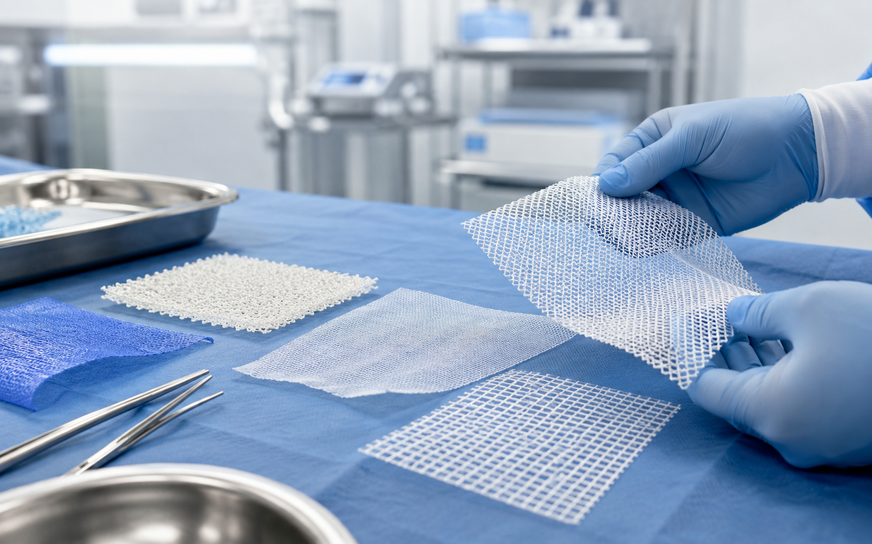
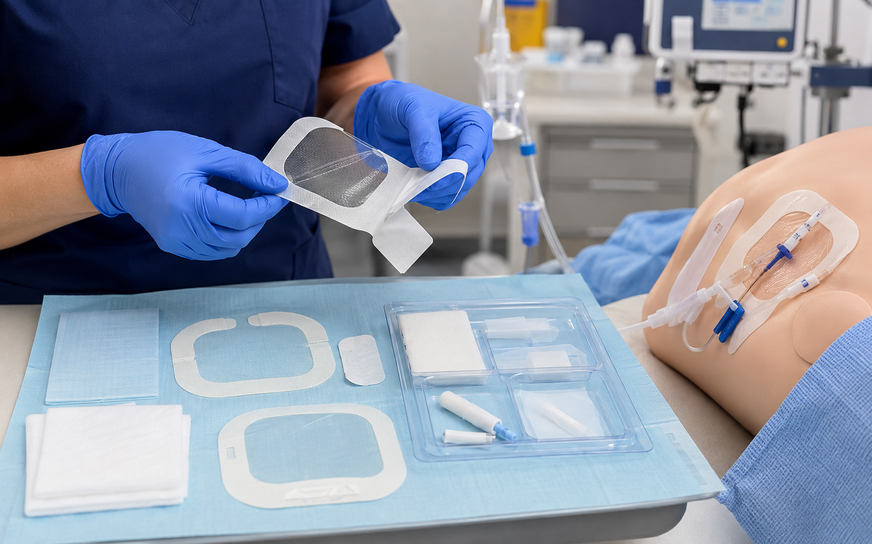
Polyurethane film is widely used in medical dressings because a very thin material can combine flexibility, transparency, moisture-vapor transmission, and a protective barrier. These properties make it suitable for transparent wound dressings, catheter fixation products, postoperative site coverage, and secondary dressing retention.
However, “PU film” is a broad material term. Film produced for textiles, packaging, or industrial lamination is not automatically appropriate for medical skin contact. Healthcare buyers should evaluate the finished dressing system, including the film, adhesive, liner, application frame, sterilization, packaging, and approved intended use.
Why Is Polyurethane Film Used in Medical Dressings?
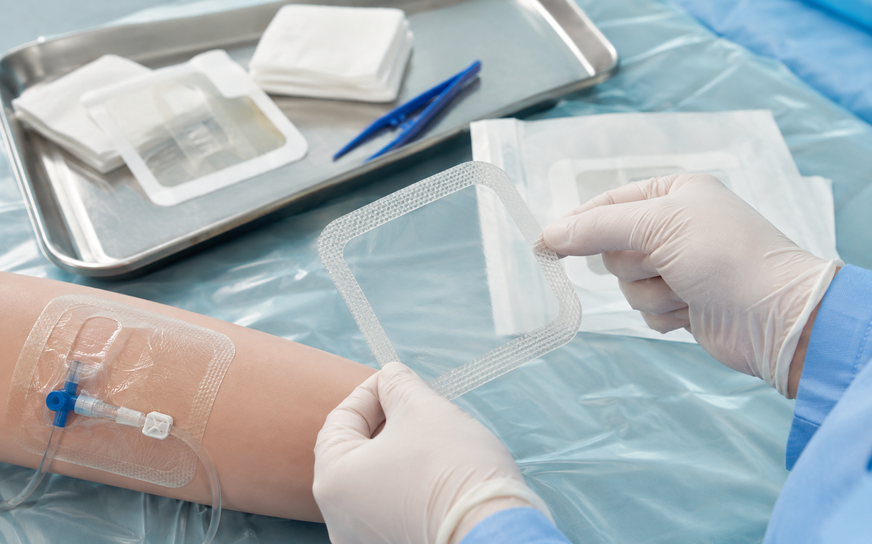
Polyurethane can be processed into thin, conformable films that move with the skin and keep the covered area visible. Transparency is particularly useful when healthcare professionals need to inspect a wound or catheter site without removing the entire dressing.
A finished medical transparent adhesive film may contain:
A polyurethane film substrate
A medical adhesive coating
A release liner
An application frame
A catheter notch or reinforcement strip
An individual sterile pouch
The interaction between these components affects handling, adhesion, edge lift, removal, visibility, and package stability.
Which Specifications Matter Most?
| Specification | Procurement Importance |
|---|
| Film thickness | Influences flexibility, handling, conformability, and strength |
| Moisture-vapor transmission | Affects moisture management beneath the dressing |
| Adhesive system | Influences fixation, skin contact, edge lift, and removal |
| Transparency | Supports observation of the covered site |
| Application frame | Helps prevent thin film from folding or adhering to itself |
| Sterilization | Must remain compatible with the film, adhesive, liner, and pouch |
| Finished packaging | Protects product integrity during transport and storage |
Terms such as breathable, waterproof, or strong adhesion should be supported by measured product data and clear test conditions.
Common Applications of Medical PU Film
Superficial Wound Coverage
A transparent film can be considered where the covered area requires protection and visual inspection. Because plain film has limited absorption, it is generally more appropriate for low-fluid applications or as part of a broader dressing system.
Postoperative Site Coverage
A conformable film may be used for selected postoperative sites when permitted by the product instructions. Buyers should confirm dimensions, adhesive border, sterile status, replacement guidance, and package integrity.
IV and Catheter Fixation
Transparent film is commonly used in catheter fixation because it combines visibility and secure attachment. Catheter-specific products may include a notch, reinforcement, tape strips, or a documentation label.
Secondary Dressing Retention
A PU film may be used to secure another dressing or provide an outer protective layer. The buyer should verify compatibility with the primary dressing and whether the complete system can manage the expected fluid level.
How Does PU Film Compare with Other Materials?
| Dressing Type | Typical Advantage | Purchasing Limitation |
|---|
| PU film | Transparent, thin, and flexible | Limited absorption unless combined with another dressing |
| Hydrocolloid | Interacts with selected wound fluid | Usually thicker and less transparent |
| Foam | Provides greater fluid-handling capacity | Does not normally provide direct site visibility |
| Alginate or CMC | Used in selected higher-fluid applications | May require a secondary dressing |
A product should be chosen according to the intended application, product instructions, site condition, and professional protocol.
What Should Be Included in a PU Film RFQ?
A useful quotation request should identify the finished medical dressing rather than asking only for polyurethane film. Include:
Intended wound or catheter application
Finished dressing and film dimensions
Required thickness or performance range
Adhesive and border design
Application-frame or reinforcement requirement
Sterile or non-sterile format
Individual pouch and carton quantity
Shelf life and storage conditions
Required quality or registration documents
OEM or private-label requirements
A qualified wound dressing factory should provide product-specific values and avoid applying one set of claims to every size or model.
Distributors comparing surgical dressing manufacturers should also review sample consistency, package artwork control, sterilization information, lot traceability, and destination-market documents.
Conclusion
Medical PU film offers transparency, conformability, and a protective layer in a thin finished dressing. Successful purchasing depends on evaluating the complete system rather than the material name alone. Film construction, adhesive, application frame, sterilization, packaging, documentation, and intended use should be reviewed together.
Frequently Asked Questions
What is a PU film dressing?
It is a medical dressing that uses a thin polyurethane film, usually combined with an adhesive, liner, and application system.
Can PU film dressing absorb wound fluid?
A plain film dressing has limited absorption. It may be used for low-fluid applications or with another dressing when permitted by the instructions.
Is a PU film dressing waterproof?
Many products are designed to resist external water exposure, but performance depends on the film, adhesive, edge seal, and correct application.
Can PU film dressings be private labeled?
Selected products may support private-label packaging, subject to quantity, artwork, documentation, and regulatory requirements.
References
Liang W, et al. Polyurethane-related dressings for skin wound repair. International Journal of Molecular Sciences. 2023;24(21):15803. Available at: https://pmc.ncbi.nlm.nih.gov/articles/PMC10649939/.
Dhivya S, Padma VV, Santhini E. Wound dressings: a review. BioMedicine. 2015;5(4):22. Available at: https://pmc.ncbi.nlm.nih.gov/articles/PMC4662938/.