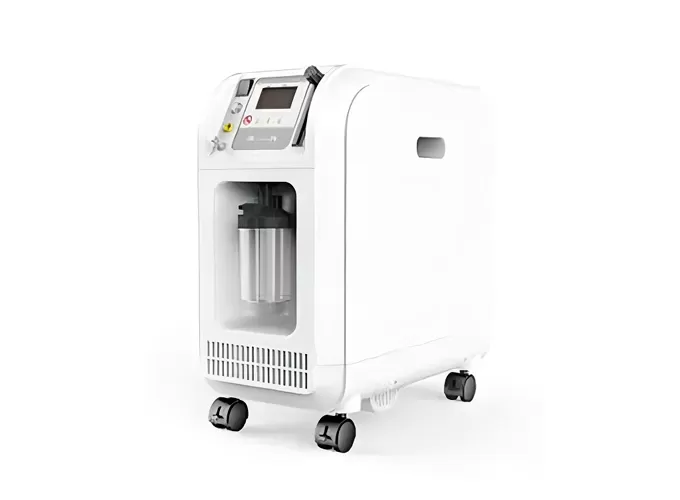
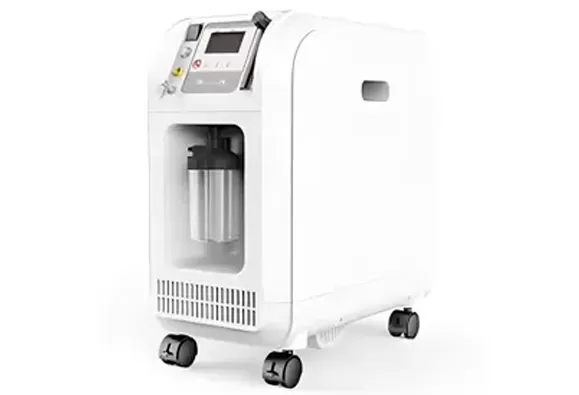

Veterinary oxygen concentrators are medical devices designed specifically for animals. They are mainly used to provide high-concentration oxygen support for sick, injured or surgical animals to help improve hypoxia and promote recovery. The core principle is to separate high-purity oxygen from the air through molecular sieve technology, with a concentration of usually more than 90%, to meet the medical needs of animals.
It is equipped with a high-precision oxygen concentration monitoring system, and the data is displayed in real time, so that veterinarians can see the oxygen supply at a glance and adjust it in time as needed. The machine has built-in high-quality molecular sieves to efficiently separate oxygen from the air, and the purity of oxygen production is guaranteed. The air inlet is equipped with a professional filter device to purify the air layer by layer, block impurities and germs, and ensure that animals inhale clean oxygen. Moreover, the operation interface is simple and easy to understand, so veterinarians and medical staff can quickly get started and race against time during emergency treatment. When animals are seriously injured in car accidents, respiratory infections or undergo complex operations, veterinary oxygen machines rely on stable and reliable performance to sustain the life of animals and become an indispensable "life guard station" in animal hospitals.
| JC5B-VET Oxygen Concentrator | |
| Size(mm) | 508*260*530 |
| Weight(g) | 21000 |
| Power supply | AC 220V 50Hz |
| Noise(dB) | <55 |
| Flow range (L/min) | 0.5-5 |
| Concentrator | 93%士3% |
| Maximum recommended flow (L/min) | 5 |
Convenient data display: With a variety of data display, the presentation effect is clear and intuitive, and users can easily grasp the equipment operation status and oxygen-related parameters.
Medical-grade filtration: It adopts medical-grade air intake filter element with detachable design, which is convenient for cleaning and replacement to ensure air quality.
Excellent oxygen production performance: Using molecular sieve technology, the adsorption efficiency is extremely high, and it can output high-concentration oxygen to meet the oxygen inhalation needs of different groups of people.
Intelligent alarm: It is equipped with a multi-dimensional abnormal state alarm system. Once the equipment is abnormal, it can remind the user in time to ensure the safety of use in all aspects.
Wide range of applicable scenarios: It can be used in high-altitude areas (below 4300m). Even if the equipment efficiency and oxygen inhalation concentration are reduced, it can still provide necessary oxygen inhalation support for people in the area.
Rich and diverse functions: It supports atomization function, realizing multi-purpose of one machine, greatly expanding the application scenarios of the equipment and enhancing its practical value.
Preparation: Place the oxygen concentrator stably in a ventilated, dry place, away from heat sources and flammable materials. Connect the power cord to ensure normal power supply.
Install accessories: Fill the humidifier bottle with an appropriate amount of distilled water according to the instructions, and connect it to the humidifier bottle interface of the oxygen concentrator. Then connect one end of the oxygen tube to the oxygen outlet of the oxygen concentrator, and prepare to connect the animal oxygen mask or nasal oxygen tube at the other end.
Power on: Turn on the power switch of the oxygen concentrator, and the machine starts self-test. At this time, you can see the display light up and display relevant parameters.
Adjust parameters: According to the animal's condition and body size, adjust the oxygen flow and oxygen concentration according to the instructions. Generally, the oxygen flow rate for small animals is 1-3L/min, and for large animals is 3-5L/min, and the oxygen concentration is mostly set to 90%-96%.
Connect animals: Gently put on the oxygen mask or nasal oxygen tube for the animal to ensure a good fit and avoid air leakage.
Use observation: Pay close attention to the animal's condition and the operation of the oxygen concentrator. If any abnormality is found, stop the machine immediately for inspection.
Shutdown: After use, first remove the animal oxygen breathing equipment, then turn off the power switch of the oxygen concentrator and unplug the power cord.
Respiratory diseases: Helps relieve breathing difficulties caused by pneumonia, bronchitis and asthma
Cardiovascular diseases: Improves hypoxia caused by heart failure and shock
Surgery and anesthesia: Improves blood oxygen levels, reduces surgical risks, and promotes anesthesia recovery and postoperative recovery.
Trauma and emergency treatment: Relieves hypoxia caused by blood loss or trauma and oxygen therapy for animals poisoned by carbon monoxide.
Intensive care: Provides continuous oxygen support for critically ill patients or premature or weak newborn animals.
Altitude adaptation: Relieves symptoms of hypoxia caused by high altitude environments.
Other indications: Improves hypoxia caused by insufficient red blood cells. Supports oxygen supply for neurological diseases such as brain damage or epilepsy.
Want to Get More Details About JCMED Medical Consumables?
We're waiting for your contact!