
English
JCMED(TIANJIN) IMPORT&EXPORT CO., LTD.

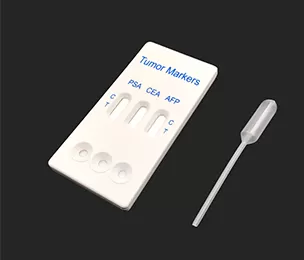
Tumor Markers Test

Tumor Markers Test

Tumor markers tests are diagnostic tools designed to detect specific substances in the blood, urine, or tissues that may indicate the presence of cancer or monitor its progression. These tests measure proteins, hormones, genetic mutations, or other biomolecules associated with various types of tumors. Tumor markers are used for early screening, diagnosis, prognosis assessment, treatment monitoring, and recurrence detection.

Common tumor markers include:

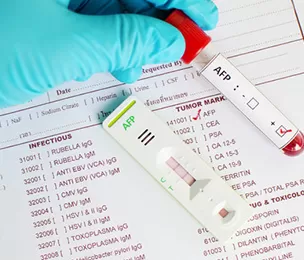
AFP (Alpha-Fetoprotein) – for liver and germ cell cancers

CEA (Carcinoembryonic Antigen) – for colorectal, lung, and breast cancers

CA 125 – for ovarian cancer

PSA (Prostate-Specific Antigen) – for prostate cancer

CA 19-9 – for pancreatic and gastrointestinal cancers

HER2/neu & BRCA mutations – for breast and ovarian cancers

These tests are performed using advanced immunoassay techniques (e.g., ELISA, CLIA, ECLIA) or molecular diagnostics (PCR, NGS). Some tests are combined with imaging or biopsy for higher accuracy.

Tumor marker tests are minimally invasive, typically requiring only a blood sample, and provide rapid results. They play a crucial role in personalized medicine, helping clinicians tailor treatment plans based on biomarker profiles. However, they are not standalone diagnostic tools and are used alongside other clinical evaluations for comprehensive cancer management.


Specifications of Tumor Markers Test
Tumor Markers Test  肿瘤标志物检测
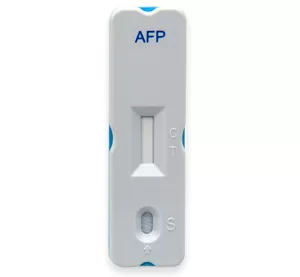
AFP Alpha Fetoprotein Test CassetteWB/S/PCassette25T
CEA Carcinoma Embryonic Ag Test CassetteWB/S/PCassette25T
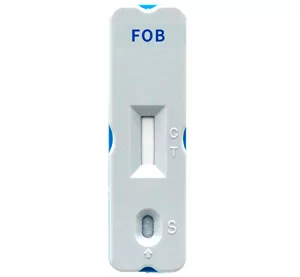
FOB Fecal Occult Blood Test CassetteFecesCassette20T
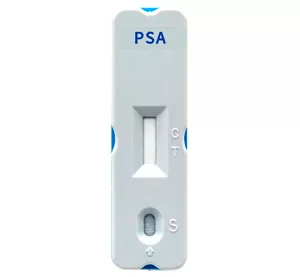
PSA Prostate Specific Ag Test CassetteWB/S/PCassette25T
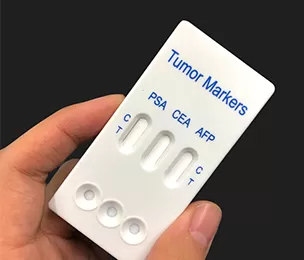
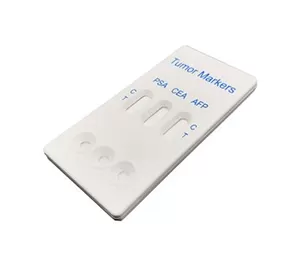
AFP/CEA/PSA Test PanelWB/S/PPanel20T
TF Transferrin Test CassetteFecesCassette25T
Hemoglobin (Hb)/Transferrin (TF) Test PanelFecesPanel20T


Steps for Using a Tumor Markers Test

Preparation

Patient Preparation: Inform the patient that fasting may be required (depending on the marker). Avoid strenuous exercise before the test.

Sample Type: Confirm whether the test requires blood, urine, or tissue samples (commonly serum or plasma for blood tests).

Materials Needed: Collect sterile tubes (e.g., serum separator tubes), needles, alcohol swabs, labels, and a biohazard container.


Sample Collection

Blood Sample: Clean the venipuncture site with alcohol, draw 3-5 mL of blood into the tube, and invert gently to mix with anticoagulant (if needed).

Urine Sample: Collect midstream urine in a sterile container (for markers like BTA or UBC).

Tissue Sample: For biopsies, follow sterile procedures and place samples in formalin or as required.


Sample Handling

Centrifuge blood samples at 3000 rpm for 10 minutes to separate serum/plasma.

Label samples clearly with patient details and store at 2-8°C if not tested immediately (freeze at -20°C for long-term storage).


Testing Procedure

Automated Immunoassay: Load samples into the analyzer (e.g., ELISA, CLIA, or EIA systems) and select the tumor marker test (e.g., PSA, CA 125, CEA).

Manual Testing: Add samples to wells coated with antibodies, incubate, wash, and measure absorbance/fluorescence.


Result Interpretation

Compare values with reference ranges (e.g., PSA <4 ng/mL for men).

High levels may indicate malignancy but require further diagnostic confirmation (imaging, biopsy).


Post-Test Steps

Dispose of used materials in biohazard waste.

Document results in the patient’s file and consult a physician for clinical correlation.


Features of Tumor Markers Test
  • High Accuracy and Sensitivity – Tumor marker tests utilize advanced immunoassay or molecular techniques to detect specific biomarkers associated with cancers, ensuring precise and early identification of malignant conditions.

  • Wide Range of Detectable Markers – The tests cover various tumor markers such as AFP (liver cancer), CA 125 (ovarian cancer), PSA (prostate cancer), CEA (colorectal cancer), and CA 19-9 (pancreatic cancer), enabling multi-cancer screening.

  • Non-Invasive or Minimally Invasive – Most tumor marker tests require only a blood sample, reducing patient discomfort compared to biopsies or imaging procedures.

  • Early Cancer Detection – These tests help identify cancer at early stages, even before symptoms appear, improving treatment outcomes and survival rates.

  • Monitoring Treatment Efficacy – Tumor marker levels are tracked over time to assess the effectiveness of chemotherapy, radiation, or surgery, allowing for timely adjustments in therapy.

  • Detection of Recurrence – Regular testing can signal cancer recurrence earlier than imaging scans, enabling prompt intervention.

  • Automated and Rapid Processing – Modern tumor marker tests use automated analyzers, delivering fast and reliable results within hours.

  • Customizable Panels – Clinicians can order individual markers or comprehensive panels based on patient risk factors (e.g., family history, genetic predisposition).

  • High Specificity with Low False Positives – Advanced assays minimize cross-reactivity with non-cancerous conditions, reducing unnecessary follow-up tests.

  • Cost-Effective Screening Tool – Compared to imaging or biopsies, tumor marker tests offer a more affordable option for initial cancer screening and monitoring.

  • Compatibility with Other Diagnostics – Results can be combined with imaging, biopsies, or liquid biopsies for a more accurate diagnosis.

  • Personalized Medicine Support – Some markers (e.g., HER2/neu, BRCA) guide targeted therapy and immunotherapy selection.

  • Portable Point-of-Care Options – Emerging rapid tests allow for decentralized testing in clinics or remote settings.

  • Research and Drug Development Use – Tumor marker assays aid in clinical trials by evaluating new anticancer drugs' biological effects.


Application of Tumor Markers Test

Hospital Oncology Departments

Cancer Diagnostic Laboratories

Early Disease Screening Clinics

Medical Research Institutions

Primary Care Facilities

Specialized Treatment Centers


Get In Touch With JCMED
CONTACT JCMED

Want to Get More Details About JCMED Medical Consumables?

We're waiting for your contact!