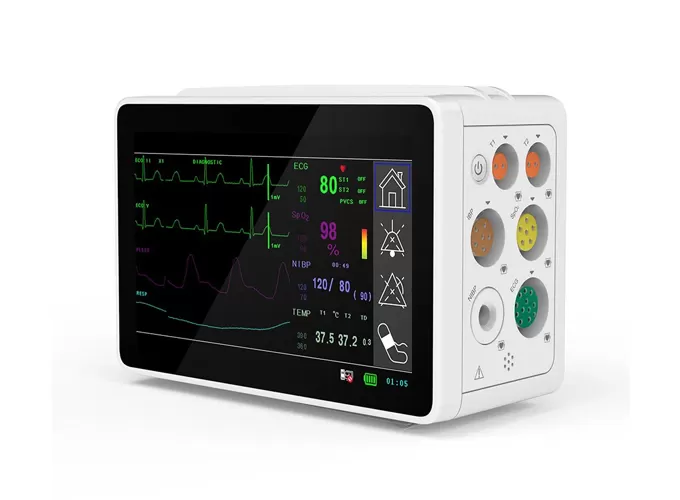
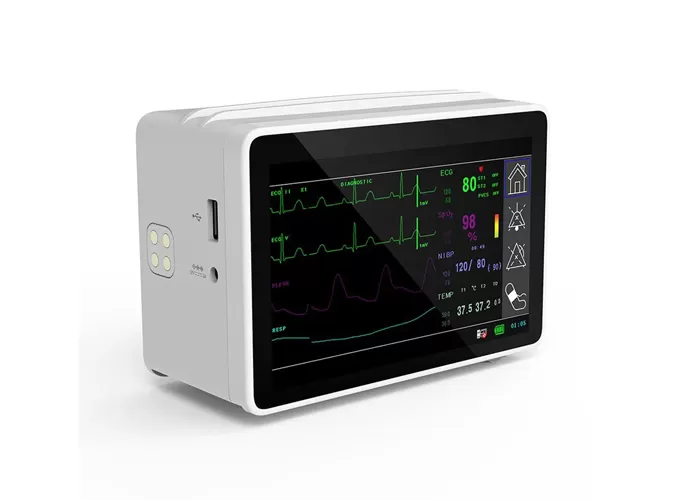
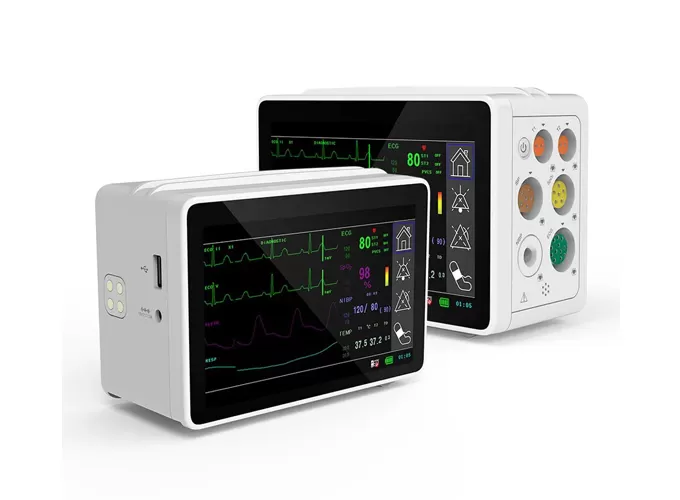
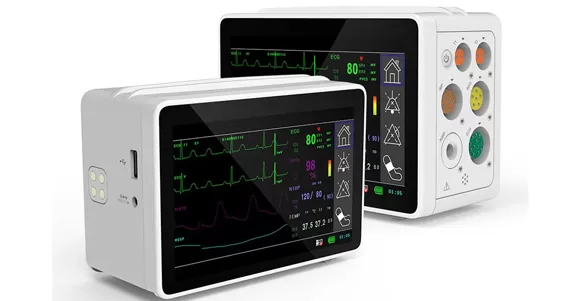
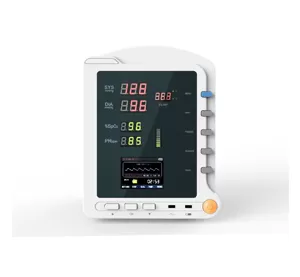
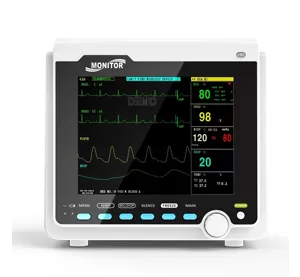
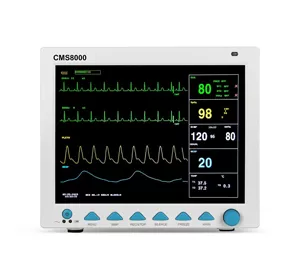

TS1VET veterinary monitor is designed for animal medical treatment, integrating portability, ease of operation and multi-functional monitoring. Equipped with a 5-inch touch screen, the operation is intuitive and simple, and it supports the automatic lock screen function to effectively prevent misoperation. The body is lightweight, weighing less than 1.0kg, easy to carry and transport, and meets the needs of veterinary visits or mobile monitoring in the hospital.
The monitor provides a variety of display interfaces, which can clearly present key physiological parameters such as heart rate, blood oxygen, and respiration, and supports data trend analysis, so that medical staff can grasp the health status of animals in real time. The shell meets the IP44 protection level (IEC/EN 60529 standard), is dustproof and splashproof, and can adapt to a variety of clinical environments. The fanless design is quiet and energy-saving, reduces dust accumulation, and reduces the risk of cross-infection, which is especially suitable for sensitive animal diagnosis and treatment scenarios.
In addition, the TS1 has a built-in large-capacity battery with long battery life, ensuring long-term continuous monitoring and uninterrupted diagnosis and treatment. Whether it is emergency, surgery or daily monitoring, the TS1 veterinary monitor can provide veterinarians with reliable and efficient support to help improve the quality of animal medical care.
| Power Supply | 100~240 V~50/60 Hz (adapter output: DC 12 V) |
| Display | 5" touch screen |
| Performance | ECG, RESP, NIBP, SpO2, PR, TEMP, IBP (optional) |
| Waterproof degree | IP44 |
| Dimension | 142*67*102 mm |
| Weight | < 1 kg |
| Safety Classification | Class I, defibrillation-proof type CF applied part |
5-inch touch screen, easy to operate
Intuitive touch operation simplifies the use process; supports automatic screen lock function to prevent accidental touch and operation.
Lightweight and portable, flexible and applicable
The weight of the whole machine is less than 1.0kg, which is easy to carry and transport, suitable for in-hospital, outpatient and emergency scenarios.
Multi-mode display, clear data trend
Provides a variety of display interfaces, supports trend analysis of key physiological parameters (such as heart rate, blood oxygen, respiration, etc.), and facilitates real-time monitoring by medical staff.
IP44 protection level, sturdy and durable
Complies with IEC/EN 60529 standards, dustproof and splashproof, adaptable to various clinical environment requirements.
Fanless design, low noise and energy saving
No mechanical cooling fan, quiet operation, low power consumption, reduce dust accumulation, and reduce the risk of cross infection.
Long-term battery life, long-term monitoring
Built-in large-capacity battery, supports long-term continuous use, ensuring uninterrupted diagnosis and treatment process.
1. Turn on the device and connect the sensor
Press and hold the power button for 3 seconds to turn on the device and confirm that the battery is fully charged.
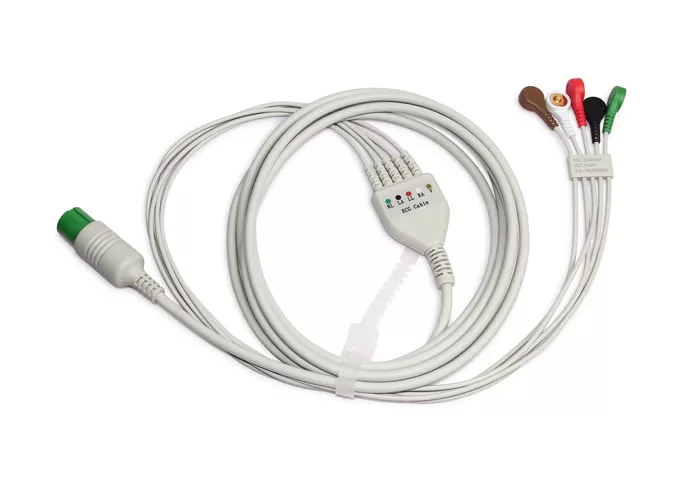
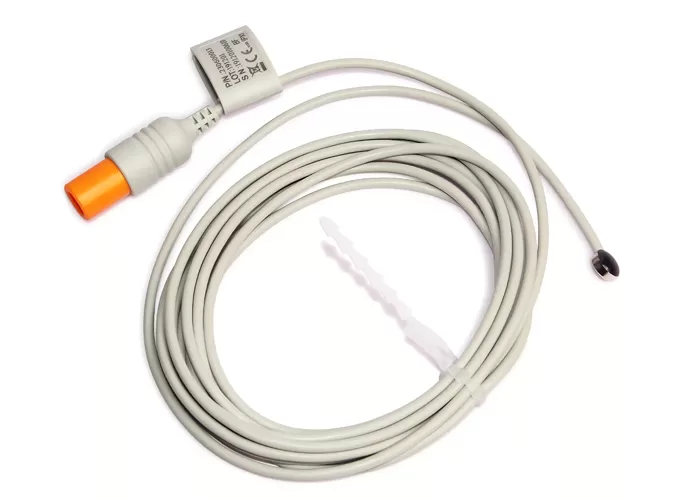
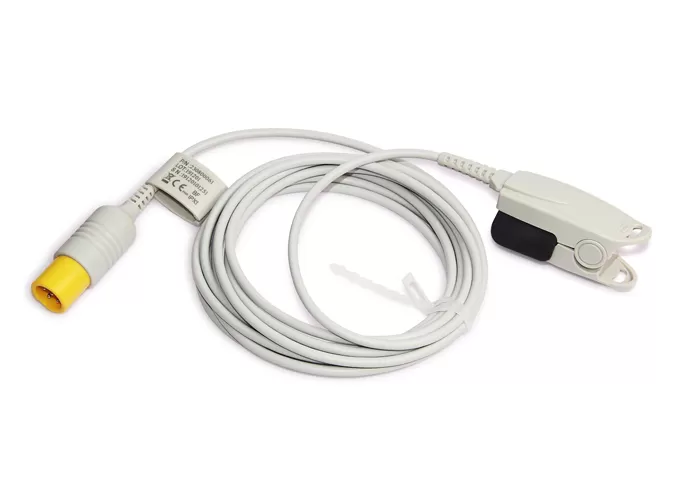
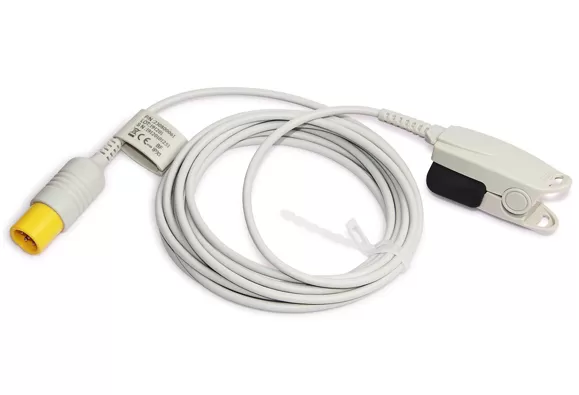
Check whether the sensor cable is intact and connected to the animal correctly (such as blood oxygen probe, ECG lead, etc.).
2. Set parameters
Click the screen to select the monitoring mode (such as ECG, blood oxygen, respiration, etc.).
Adjust the alarm threshold as needed (such as upper and lower limits of heart rate).
3. Monitoring
Properly fix the sensor to the animal's body surface (such as tongue clip blood oxygen probe clip on the tongue or auricle).
Observe the real-time data on the screen to ensure that the signal is stable (clear waveform, no drastic fluctuations in values).
4. Data viewing and recording
Slide the screen to switch the display interface and view the trend chart or value list.
Short press the "Record" button to save key data (optional external storage device).
5. Power off and clean
Press and hold the power button for 3 seconds to turn off the device, or automatically lock the screen after 5 minutes of idle time.
Disconnect the sensor, clean the contact area with alcohol cotton, and store it in a dry environment.
Tips:
Charge in time when the battery is low (the charging port is on the side of the device)
If the touch fails, use the screen calibration function (in the settings menu)
Outpatient examination
Emergency rescue
Chronic disease management
Preoperative evaluation
Intraoperative monitoring
Postoperative recovery
Intensive care
Special care
Home visits
Wildlife rescue
Applicable animals:
Pets (dogs, cats, rabbits, etc.)
Economic animals (cattle, sheep, pigs, etc.)
Wild animals (birds, reptiles, etc., need to adapt to special sensors)
Want to Get More Details About JCMED Medical Consumables?
We're waiting for your contact!