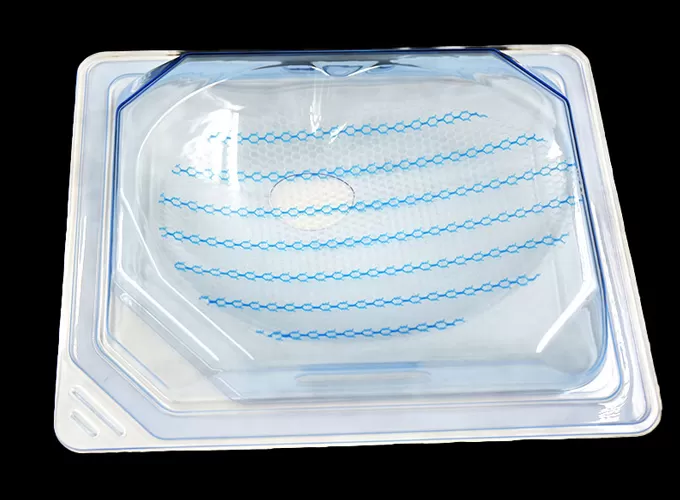
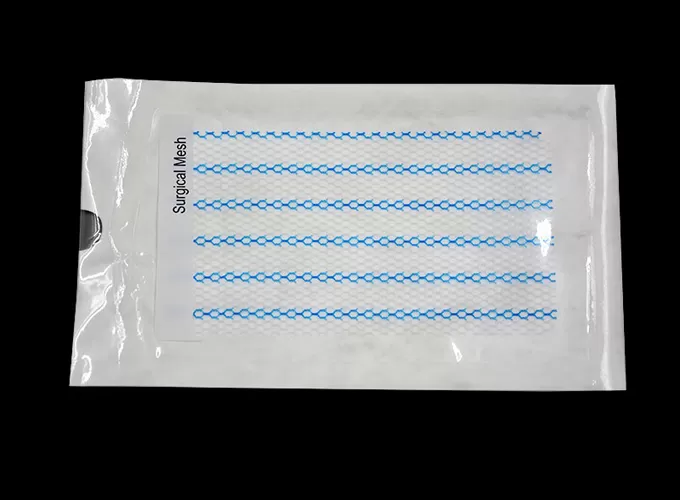
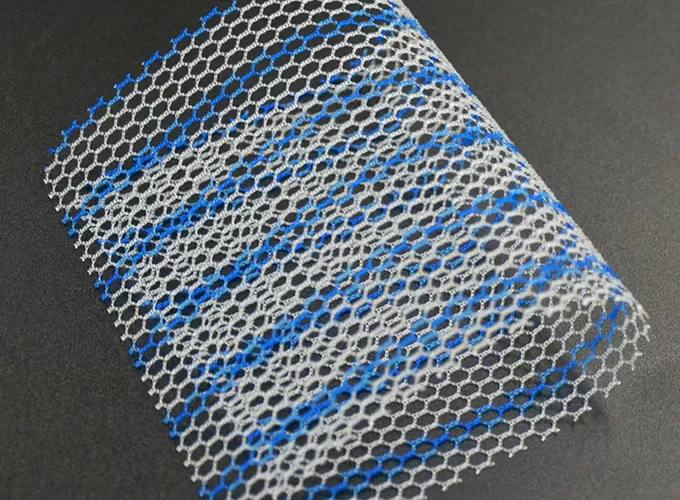
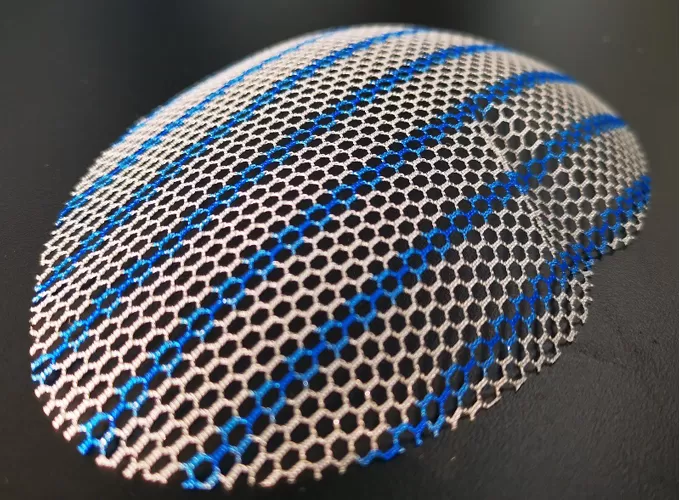
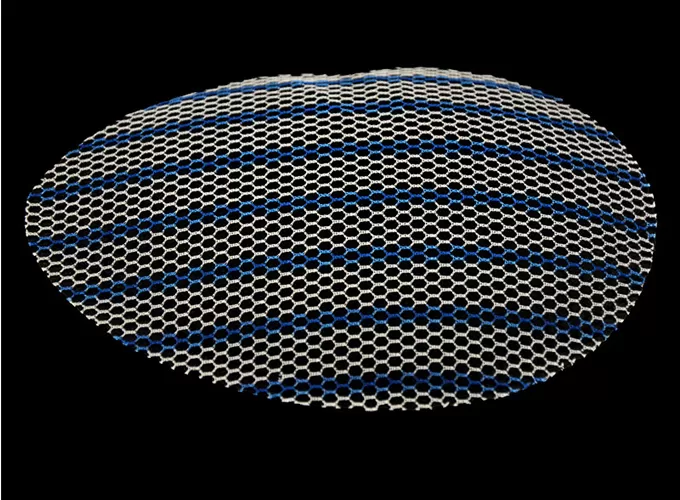
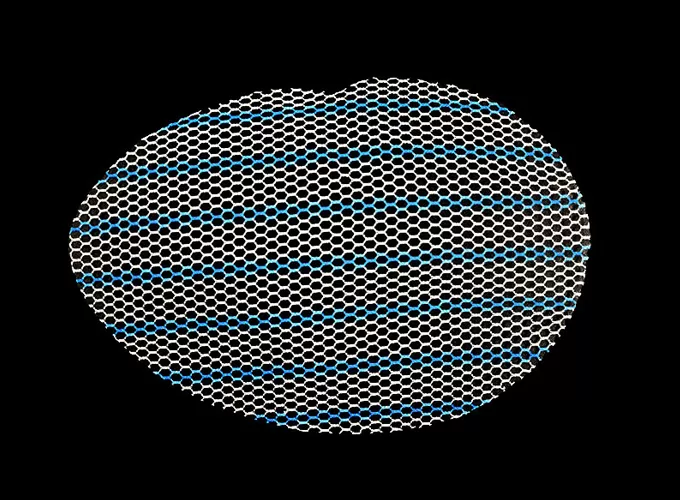
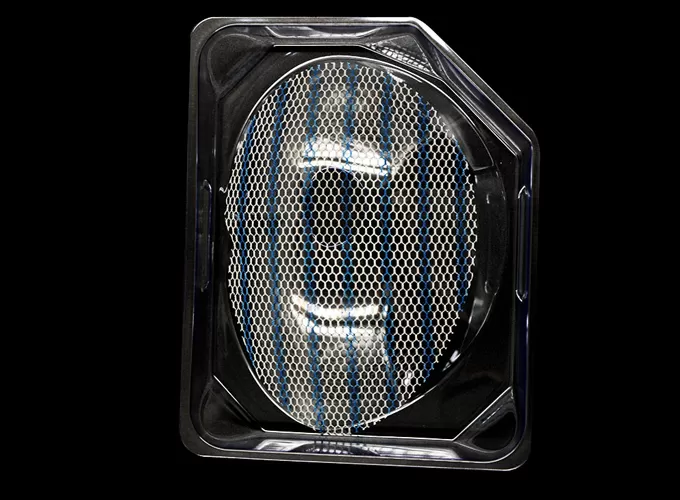




Surgical Mesh is a medical consumable used to repair or strengthen human tissue. It is usually made of polymer materials and has good biocompatibility, flexibility and certain strength. According to different materials, our surgical mesh can be divided into composite mesh, PP regular mesh and PP light mesh.
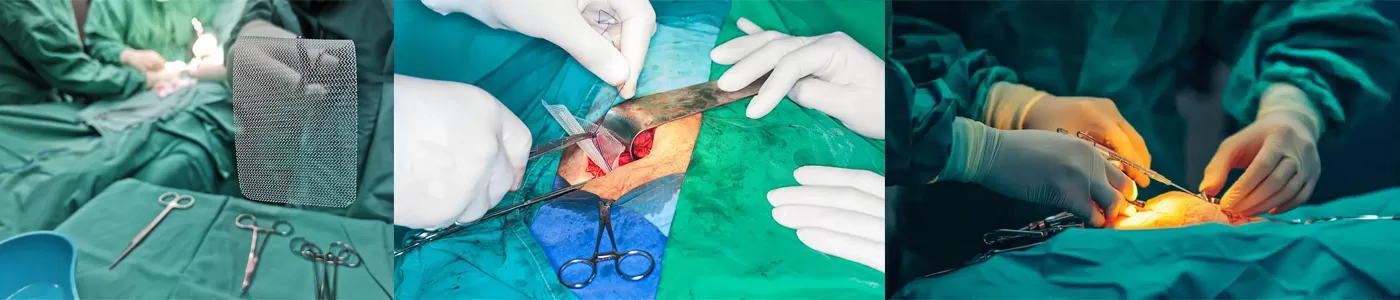
In surgical operations, surgical mesh is widely used and can be fixed to the part that needs to be repaired by suturing, etc., to help tissue healing, reduce recurrence rate, reduce postoperative pain and complications, and effectively improve the patient's quality of life and improve treatment effects. It plays an important role in hernia repair, chest wall reconstruction, vascular repair and other fields.
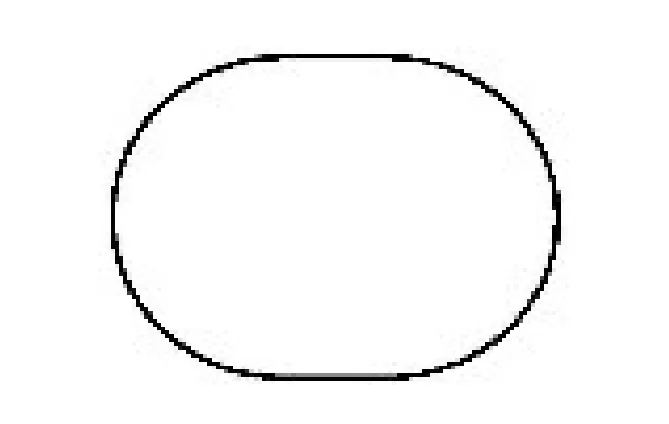
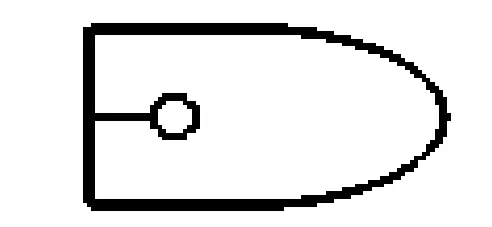
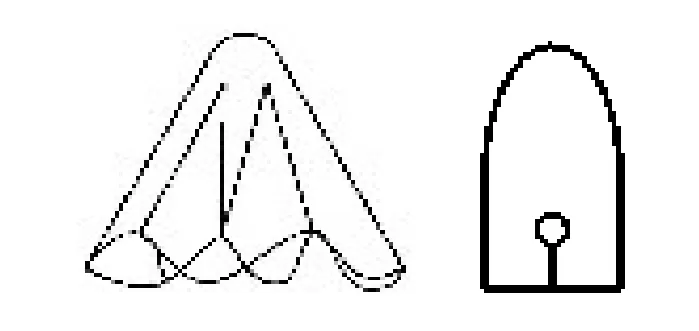
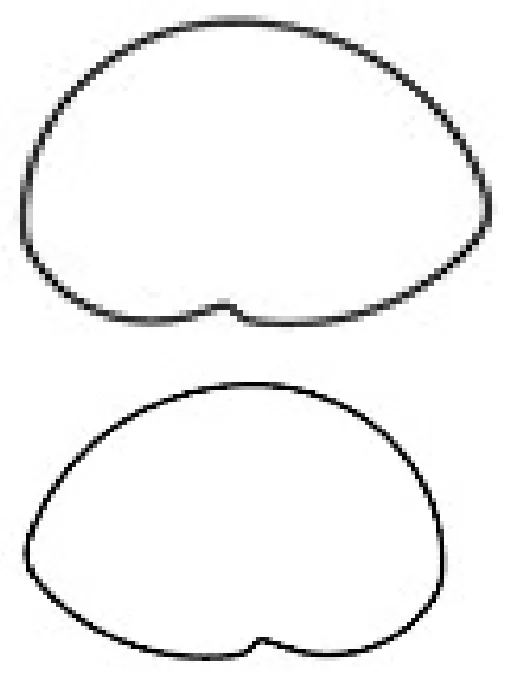
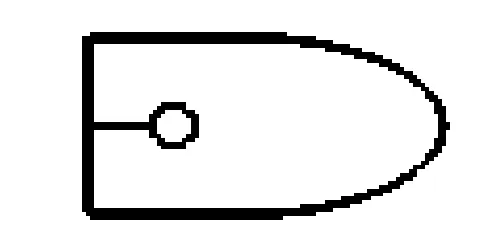
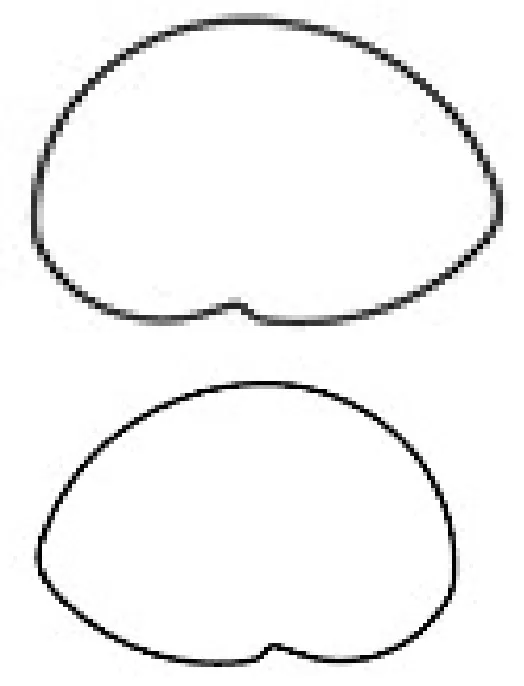
| CODE | Shape | Size(cm x cm) | Pcs/Box |
| EHD0102 |
| 10x10 | 1 |
| EHD0101 | 7.6x15 | 1 | |
| EHD0103 | 10x15 | 1 | |
| EHD0104 | 15x15 | 1 | |
| EHD0105 | 15x20 | 1 | |
| EHD0106 | 20x25 | 1 | |
| EHD0109 | 20x30 | 1 | |
| EHD0110 | 25x30 | 1 | |
| EHD0112 | 30x30 | 1 | |
| EHD0202 |
| D10 | 1 |
| EHD0203 | D12 | 1 | |
| EHD0204 | D15 | 1 | |
| EHD0302 |
| 10x15 | 1 |
| EHD0304 | 15x20 | 1 | |
| EHD0307 | 20x25 | 1 |
| Product Code 60g/m2 | Shape | Size(Cm X Cm) | Pcs/Box | Pcs/Carton |
| EHA0403 |
| 6x11 | 5 | 300 |
| EHA0405 | 8x15 | 5 | 300 | |
| EHA0406 | 10x15 | 5 | 250 | |
| EHA0407 | 15x15 | 5 | 250 | |
| EHA0408 | 15x20 | 5 | 200 | |
| EHA0411 | 30x30 | 1 | 200 | |
| EHA0418 |
| 4.5x9 | 5 | 300 |
| EHA0412 | 6x13 | 5 | 300 | |
| EHA0105 |
| D7.8 6x11 | 1 | 40 |
| EHA0111 | D8.6 6x11 | 1 | 40 | |
| EHA0302 |
| 10x14.5 L | 1 | 40 |
| EHA0303 | 11x14.5 L1 | 1 | 40 | |
| EHA0306 | 0x14.5 R | 1 | 40 | |
| EHA0307 | 11x14.5 R | 1 | 40 |
| Product Code 40g/m2 | Shape | Size(Cm X Cm) | Pcs/Box | Pcs/Carton |
| EHB0403 |
| 6x11 | 5 | 300 |
| EHB0405 | 8x15 | 5 | 300 | |
| EHB0406 | 10x15 | 5 | 250 | |
| EHB0407 | 15x15 | 5 | 250 | |
| EHB0408 | 15x20 | 5 | 200 | |
| EHB0411 | 30x30 | 1 | 200 | |
| EHB0418 |
| 4.5x9 | 5 | 300 |
| EHB0412 | 6x13 | 5 | 300 | |
| EHB0105 |
| D6.8 5.5x11 | 1 | 40 |
| EHB0108 | D7.6 5.5x11 | 1 | 40 | |
| EHB0302 |
| 10x14.5 L | 1 | 40 |
| EHB0303 | 11x14.5L | 1 | 40 | |
| EHB0306 | 10x14.5 R | 1 | 40 | |
| EHB0307 | 11x14.5 R | 1 | 40 |
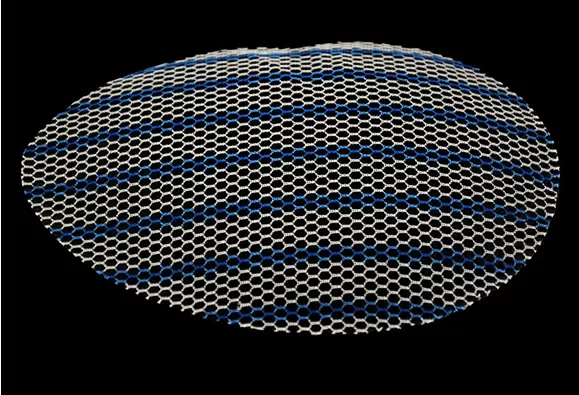
Double-layer structure, multiple advantages
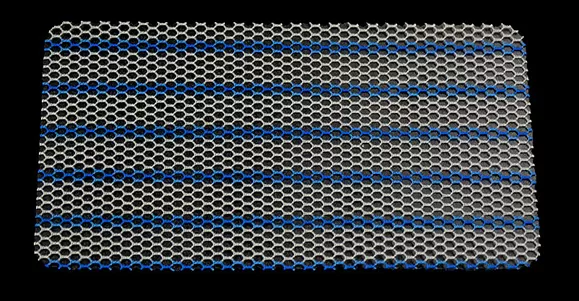
The clear blue line design is optimized for laparoscopic surgery, providing clear direction guidance during surgery, enhancing the surgical field of view, and improving the accuracy of operation.
Uniform drainage hole layout
The scientifically distributed channels promote efficient fluid exchange, significantly reduce the risk of postoperative seroma and hematoma, and accelerate healing.
Hexagonal macroporous structure
Reduce the amount of implant material and reduce foreign body reaction
Greatly reduce the probability of chronic inflammation and improve tissue compatibility
5mm absorbable anti-adhesion barrier
The innovative coating effectively isolates the polypropylene material from the tissue to prevent friction adhesion, taking into account both strength and safety.
"H"-shaped orientation mark
Quickly identify the front and back side positions under the laparoscopic field of view, avoid misplacement during surgery, and save surgical time.
Ready-to-use convenient design
No need for preoperative hydrophilic treatment, ready to use after opening the bag, simplifying the process and improving surgical efficiency.

1. Preoperative preparation
Confirm the type and size of the patch
Open the package aseptically and use it immediately (no need to soak or cut)
2. Placement during surgery
Confirm the front and back according to the "h" mark (the anti-adhesion layer faces the internal organs)
Unfold the patch to ensure that the patch covers the hernia defect area fully and is positioned accurately. (Pull gently to keep it flat)
3. Fix the patch
Use a suture to fix the edges (the spacing is recommended to be 1-1.5cm) to prevent displacement.
Ensure there is no curling or wrinkles
4. Suture the incision
Suture each layer of tissue in turn and close the incision. Restore the incision to a good anatomical structure.
Hernia repair: inguinal hernia, umbilical hernia, incisional hernia, parastomal hernia, etc., as a supporting structure to strengthen the abdominal wall defect
Pelvic floor reconstruction: female pelvic organ prolapse (such as uterine prolapse, cystocele)
Chest wall repair: diaphragmatic hernia repair, sternum/rib defect reconstruction
Repair after trauma and tumor resection: tissue replacement after abdominal wall tumor resection, traumatic abdominal wall defect repair
Vascular repair: use patches to expand the inner diameter of blood vessels and improve blood flow
Neurosurgery: repair dura mater defects to prevent complications such as cerebrospinal fluid leakage
Want to Get More Details About JCMED Medical Consumables?
We're waiting for your contact!