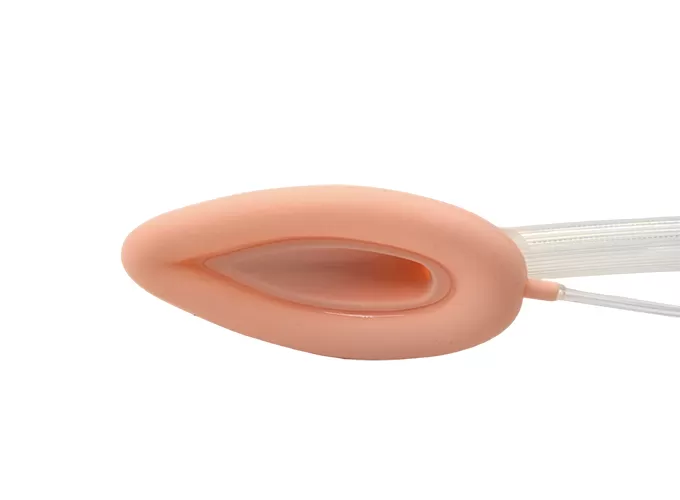
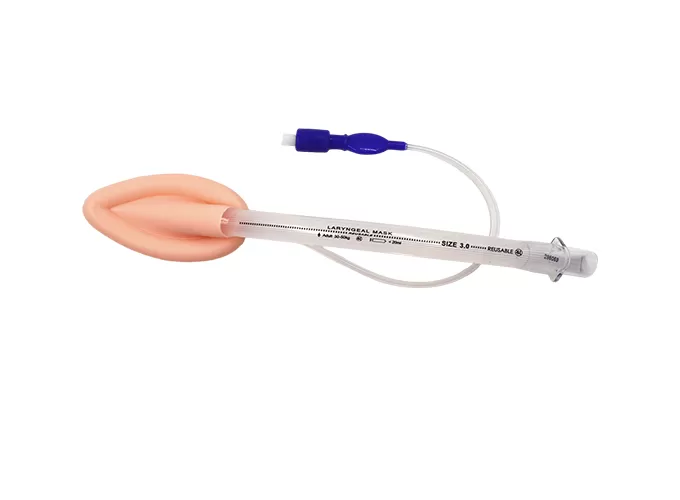
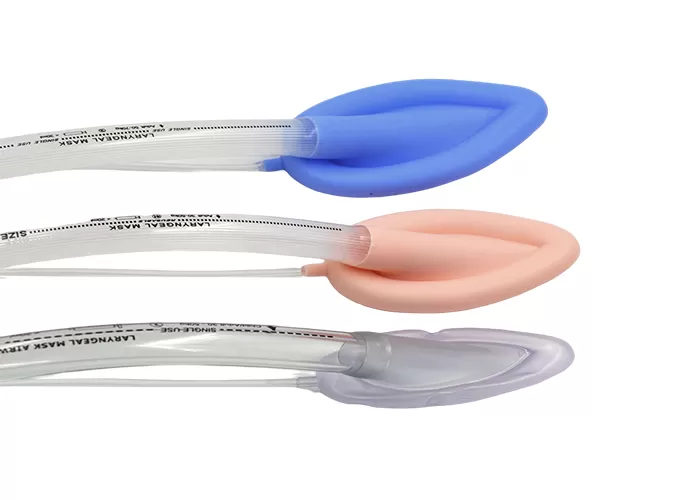
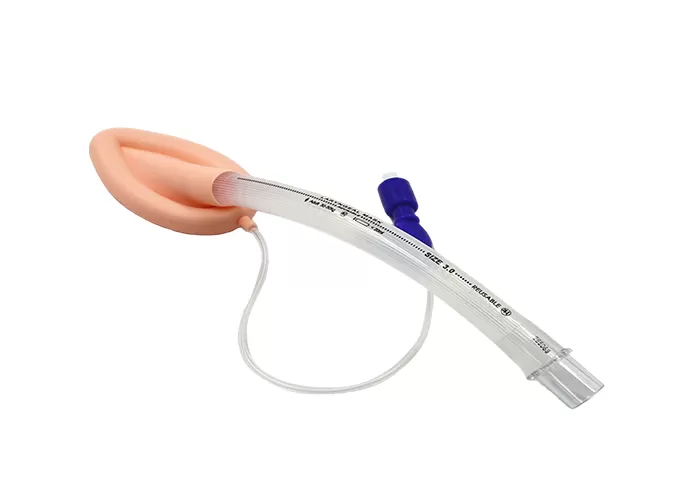
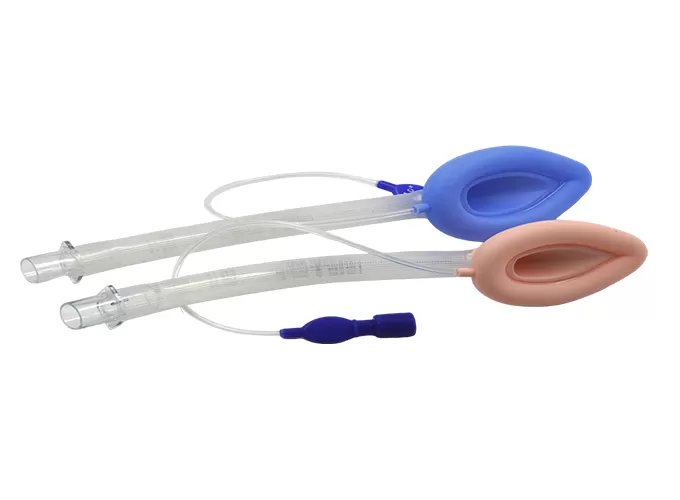
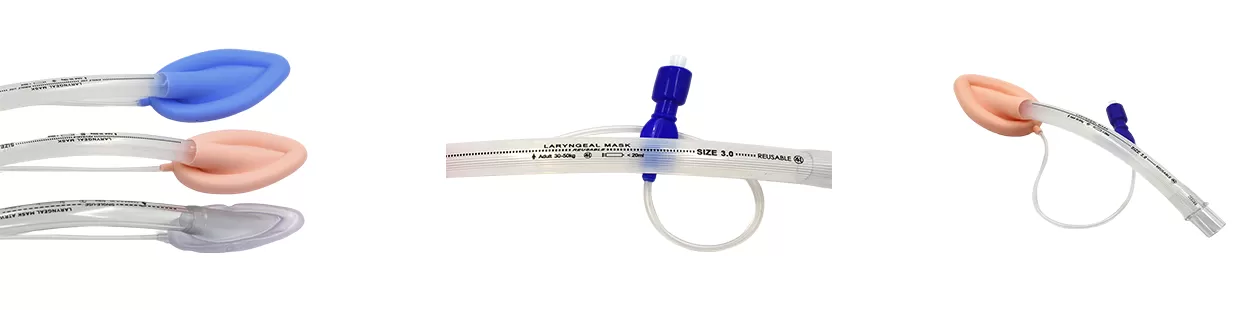
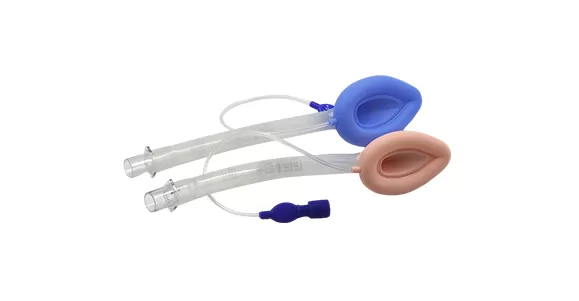
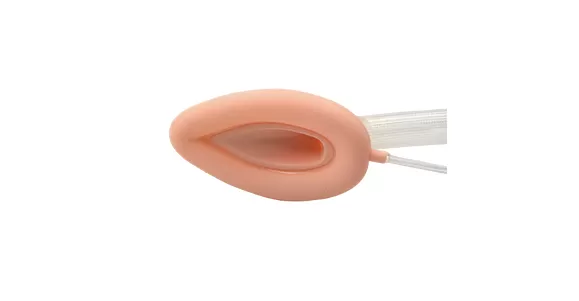
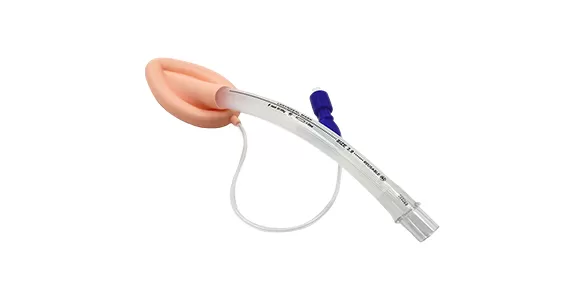
Laryngeal Mask Airway (LMA) is a medical device used to keep a patient's airway open during anesthesia or unconsciousness. It is inserted into the throat to sit above the larynx, providing a clear airway without the need for endotracheal intubation.
| Model | Laryngeal Mask Airway |
| Size: | Applicable people |
| 1# | <5kg |
| 1.5# | 5-10kg |
| 2# | 10-20kg |
| 2.5# | 20-30kg |
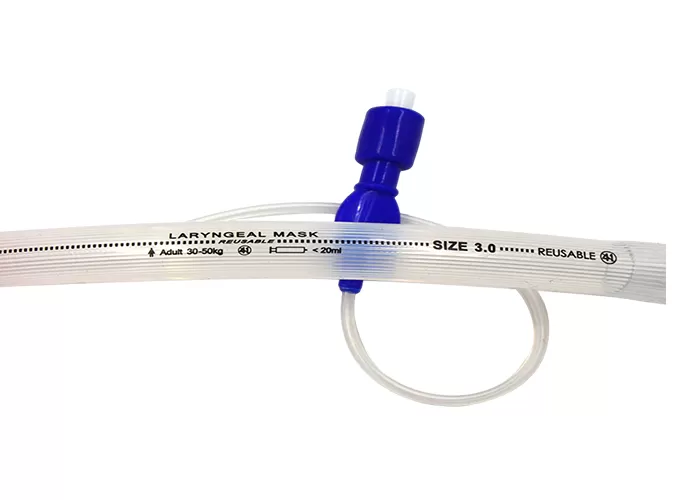
| 3# | 30-50kg |
| 4# | 50-70kg |
| 5# | >70kg |
Size: 1#-5#
Reusable Silicone Laryngeal Mask
The tube is made from 100%medical silicone,No poison and harmlessSterilization:EOPacking:1pc/blister packing
Laryngeal Mask Airway (LMA) is a medical device used to keep a patient's airway open during anesthesia or unconsciousness. It is inserted into the throat to sit above the larynx, providing a clear airway without the need for endotracheal intubation.

1. Pre-use Inspection
Check packaging integrity and expiration date.
Select the correct LMA size based on the patient's weight and age.
2. Cuff Deflation & Lubrication
Fully deflate the cuff using a syringe.
Apply a thin layer of water-based lubricant to the posterior surface of the mask.
3. Patient Positioning
Place the patient in the “sniffing” position: head slightly extended, neck flexed.
Ensure airway alignment to facilitate insertion.
4. Insertion
Hold the LMA like a pen.
Insert with the tip pressing against the hard palate.
Advance along the oropharyngeal curve until resistance is felt at the hypopharynx.
5. Cuff Inflation
Inflate the cuff with the recommended air volume (refer to size chart).
Do not exceed the maximum cuff pressure (typically < 60 cmH₂O).
Confirm a good seal.
6. Ventilation Check
Connect to the breathing circuit or manual resuscitator.
Observe chest rise, listen for bilateral breath sounds, and confirm capnography waveform.
Ensure minimal leak during ventilation.
7. Device Securing
Secure the LMA in place using adhesive tape or a tube holder.
Prevent displacement during the procedure.
8. Intra-operative Monitoring
Continuously monitor oxygen saturation, airway pressure, and patient vital signs.
Maintain cuff pressure within safe limits.
9. Removal
At the end of anesthesia, deflate the cuff once the patient regains airway reflexes.
Gently remove the LMA while suctioning oral secretions as needed.
10. Disposal or Reprocessing
Dispose of single-use LMAs as medical waste per regulations.
Reusable LMAs should be cleaned and sterilized according to the manufacturer’s instructions.
Supraglottic Airway Design
Provides a secure airway by sealing around the laryngeal inlet, without the need for endotracheal intubation.
Minimally Invasive Insertion
Easy and quick to insert, often without requiring a laryngoscope or muscle relaxants.
Soft, Medical-Grade Silicone or PVC
Made from biocompatible materials to minimize irritation and ensure patient comfort.
Single-Use or Reusable Options
Available in disposable (sterile, single-use) and reusable (autoclavable) versions to meet different clinical needs.
Multiple Sizes for All Age Groups
Wide range of sizes (1.0–5.0) suitable for neonates, children, and adults.
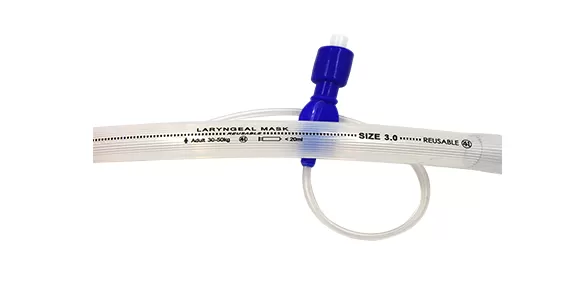
Integrated Inflation Line with Pilot Balloon
Allows for cuff inflation and monitoring to ensure proper sealing pressure.
Color-Coded Connectors
Easy identification of sizes and types, enhancing clinical efficiency and safety.
MRI-Compatible (for Silicone LMAs)
Non-metallic materials allow safe use in MRI environments.
Effective Ventilation and Airway Seal
Provides a good seal for spontaneous breathing or controlled ventilation, even in emergency situations.
Cost-Effective Airway Management
Ideal for short surgical procedures, pre-hospital settings, and ambulatory care centers.
General Anesthesia
Commonly used during short to medium-duration surgical procedures under general anesthesia to maintain airway patency.
Emergency Airway Management
Ideal for pre-hospital and in-hospital emergency situations where rapid airway access is required, especially when intubation is difficult or failed.
Ambulatory Surgery / Day Surgery
Frequently used in outpatient settings for minor surgical procedures due to ease of insertion and rapid recovery.
Difficult Airway Cases
Serves as an alternative or rescue airway in patients with anatomical challenges or during failed intubation attempts.
Intensive Care Units (ICU)
Used for temporary airway support in unconscious or sedated patients when intubation is not necessary.
Pediatric and Neonatal Use
Special LMA sizes are used for airway management in infants and children during anesthesia or resuscitation.
Pre-Hospital / Ambulance Use
Suitable for paramedics and emergency responders for airway control during transport or initial resuscitation.
MRI or Imaging Procedures
Silicone LMAs (non-metallic) are compatible with MRI environments, making them suitable for sedation during imaging.
Dental and ENT Procedures
Useful during minor oral, ear, nose, and throat procedures when a clear airway is required but intubation is not warranted.
Want to Get More Details About JCMED Medical Consumables?
We're waiting for your contact!