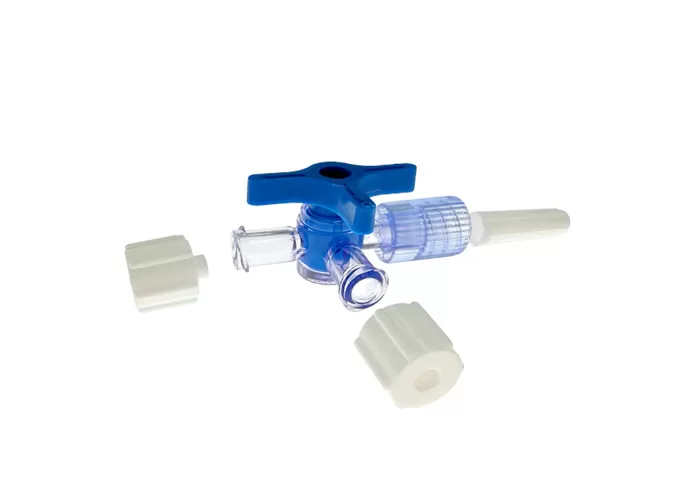
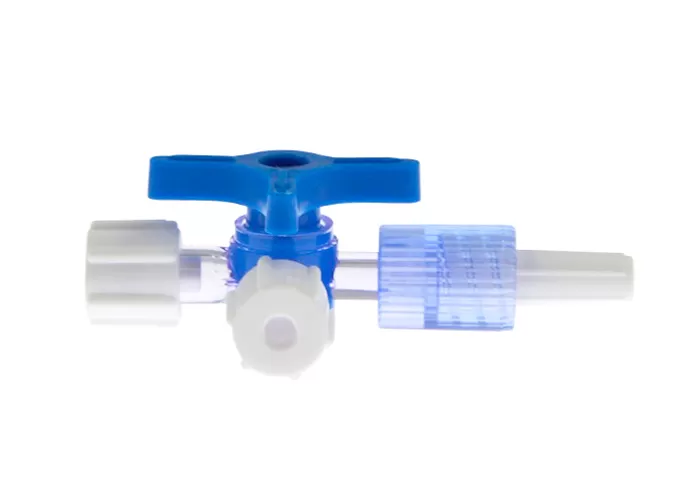
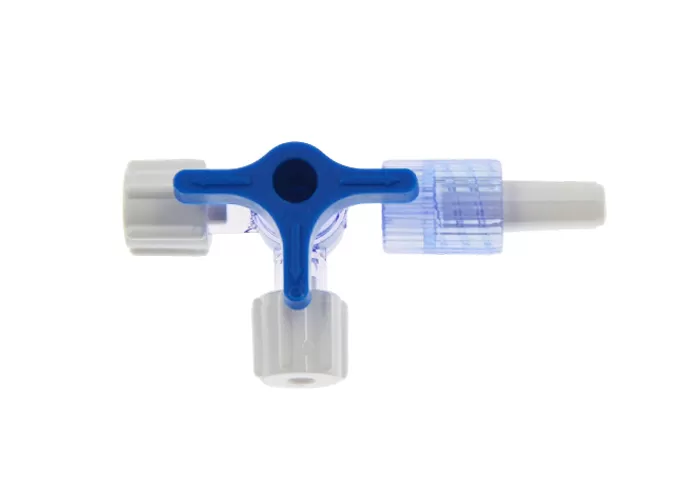
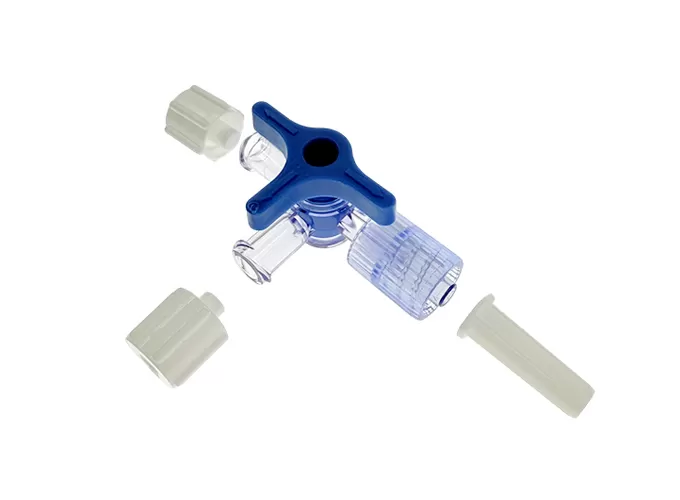
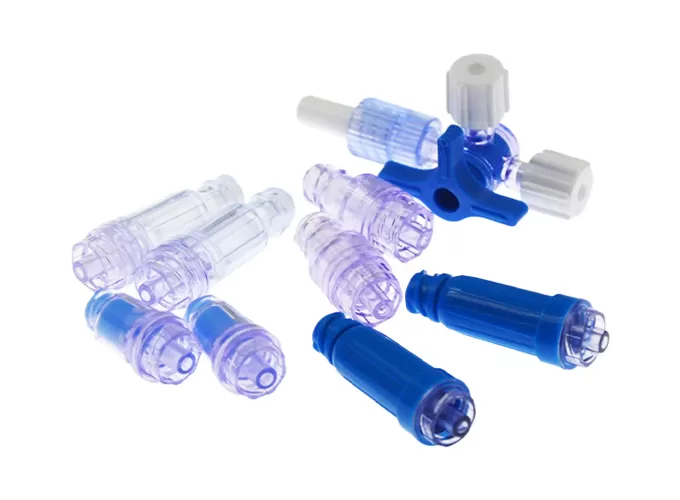
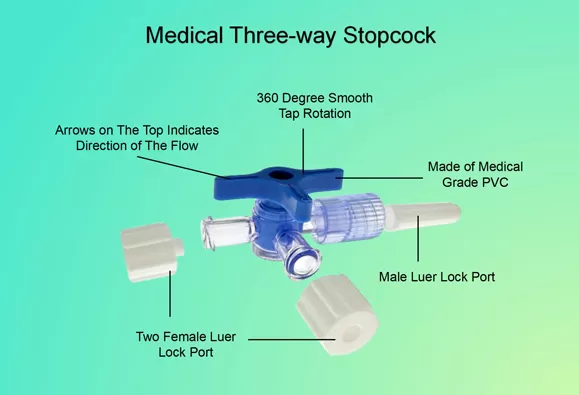
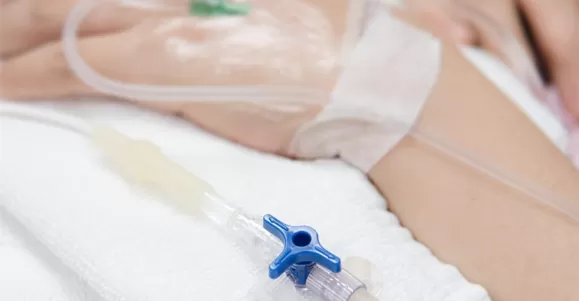
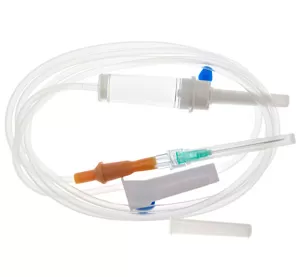
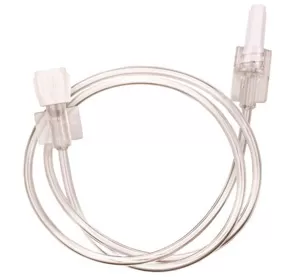
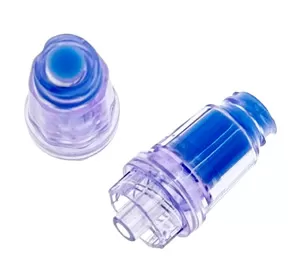
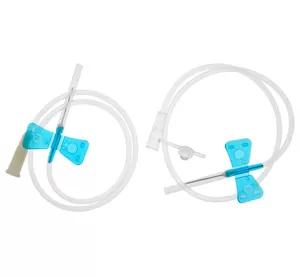


The stopcock is an indispensable micro-control valve in modern medicine. It is mainly used to accurately manage key medical processes such as infusion, drug delivery and blood pressure monitoring. Its core design includes three ports, which can be flexibly switched between different pipelines through a 360-degree rotating handle. It can connect any two ports to form a passage and completely block the flow of liquid. This design significantly improves the efficiency of clinical operations while minimizing the risk of liquid residue and contamination.
In clinical applications, the stopcock has shown excellent adaptability and reliability. It is widely used in intravenous infusion therapy, allowing medical staff to quickly switch between different drugs without repeatedly plugging and unplugging the pipeline; in intensive care, it realizes the seamless connection between blood pressure monitoring and drug therapy; in professional fields such as anesthesia and dialysis, it ensures precise liquid control. Its Luer lock interface and color coding system further enhance the safety and convenience of operation.
With the development of medical technology, the stopcock is constantly upgrading and evolving. The new model adds antibacterial coatings, enhanced pressure tolerance and other features, making it perform better in complex medical environments. This seemingly simple device continues to provide key support for modern medical practice with its excellent functionality and reliability, becoming an important tool trusted by medical staff.
| ltem | Color | Pressure resistance | Flow rate | Material |
| JC45 | Red, Yellow, Blue | 250psi | Flow rate>16L/h | PC&POM&PP |
| JC50 | Red, Yellow, Blue | 200kPa | Flow rate>16L/h | PC&PE&PP |
Flexible multi-channel control: The 360° rotating handle can quickly switch between different port connections to achieve flexible control of multiple liquid delivery paths.
Easy and efficient operation: The intuitive rotating design enables medical staff to quickly complete drug switching, significantly improving clinical work efficiency.
Reduce infection risk: Reduce the number of repeated insertions and removals of the pipeline, effectively avoiding contamination and cross-infection.
Safe and anti-falling: The standard Luer lock interface ensures a firm connection to prevent accidental disconnection during treatment.
Accurate flow control: The liquid flow direction can be accurately adjusted to meet the precise drug delivery needs of different treatment scenarios.
Economical and practical: The price is reasonable and the application is wide, which is an economical and efficient fluid management solution for medical institutions.
Strong compatibility: The standard interface design can be seamlessly connected with a variety of medical devices to expand the use scenarios.
Durable and reliable: Medical-grade materials ensure long-term stability, and some models support disinfection and reuse.
Reduce complications: Effectively prevent liquid reflux and air embolism, and improve treatment safety.
Clear identification: Color coding and flow direction indication design reduce the risk of operating errors.
Prepare the operating environment: Ensure that the operating area is clean and prepare the required three-way stopcock and connecting pipes.
Check the integrity of the package: Confirm that the product package is not damaged before unpacking and keep it sterile.
Connect the infusion line: Connect the main infusion tube to the input port (port A) of the stopcock securely.
Connect the output line: Firmly connect the patient-side catheter to the output port (port B) of the stopcock.
Check the connection firmness: Confirm that all Luer lock connectors are tightened to prevent falling off or leakage.
Rotate the handle test: Gently turn the handle to confirm that the switching of each port is smooth and unobstructed.
Set the initial passage: Adjust the handle to connect the A-B ports to establish the initial infusion channel.
Observe the flow of liquid: Check whether the infusion is unobstructed and confirm that there are no bubbles or leakage.
Switch the medication channel: Turn the handle to connect the A-C ports when necessary to switch between different medications.
Post-operation inspection: Confirm that the connection is firm after each adjustment and that the liquid flow direction meets the treatment requirements.
Multi-drug therapy
When multiple drugs need to be used at the same time, the three-way stopcock can be used to achieve rapid switching, avoid repeated punctures, and improve treatment efficiency.
Critical patient monitoring
Used for continuous blood pressure monitoring and drug infusion of ICU patients to achieve seamless connection between treatment and monitoring.
Anesthesia management
Precisely control the infusion speed and switching timing of different drugs such as anesthetics and muscle relaxants during anesthesia.
Blood purification therapy
In blood purification processes such as dialysis, safe switching and pipeline management of different dialysis fluids are achieved.
Contrast examination
Quickly switch contrast agents and saline during imaging examinations to ensure a smooth examination process.
Want to Get More Details About JCMED Medical Consumables?
We're waiting for your contact!