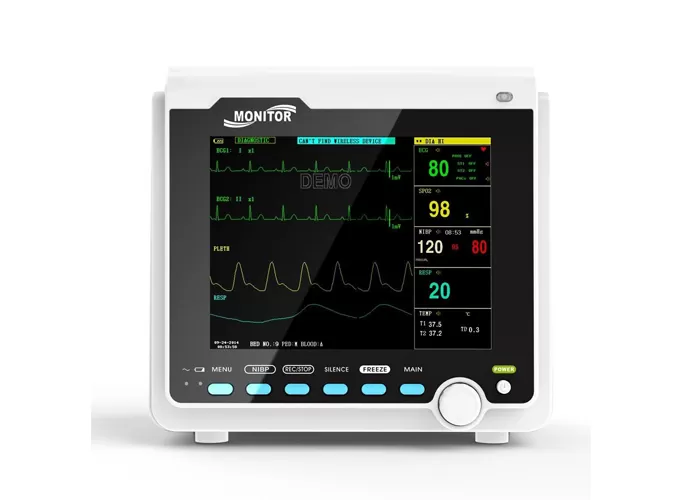
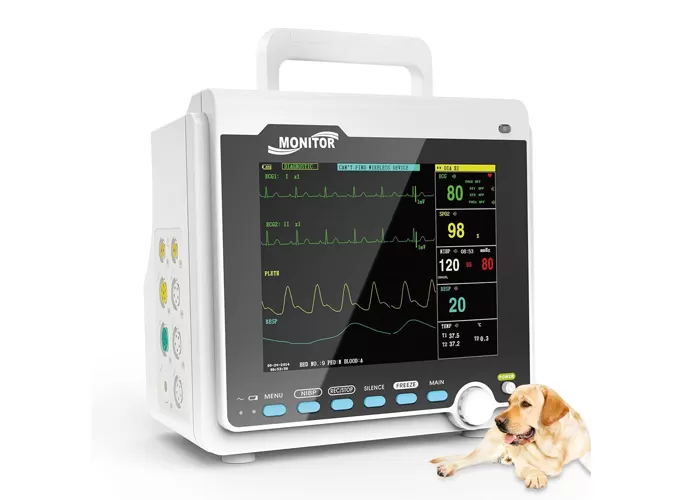
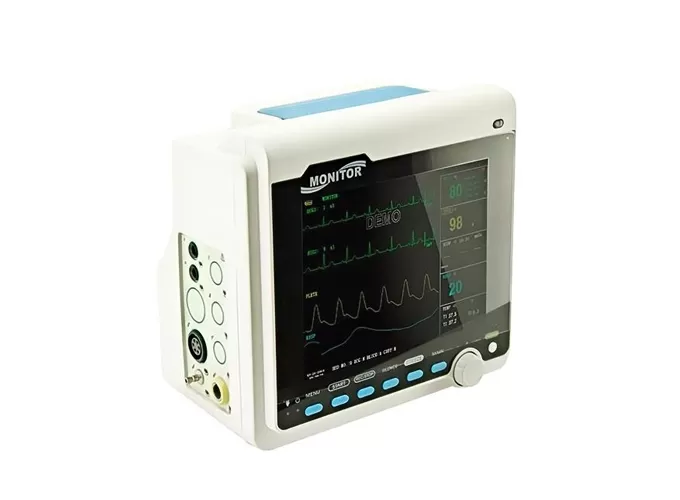
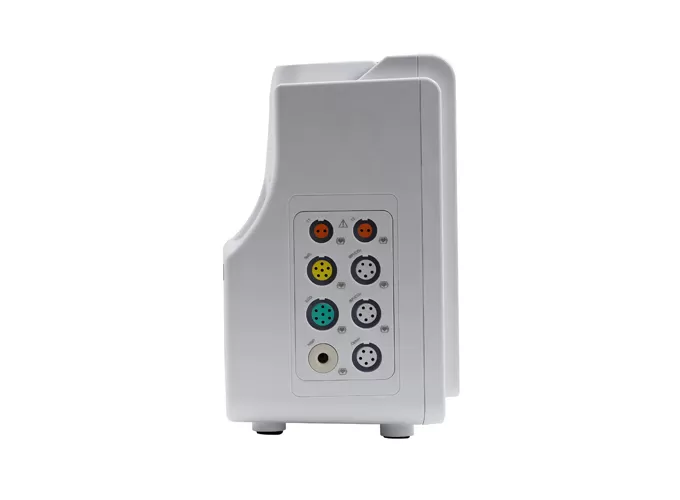
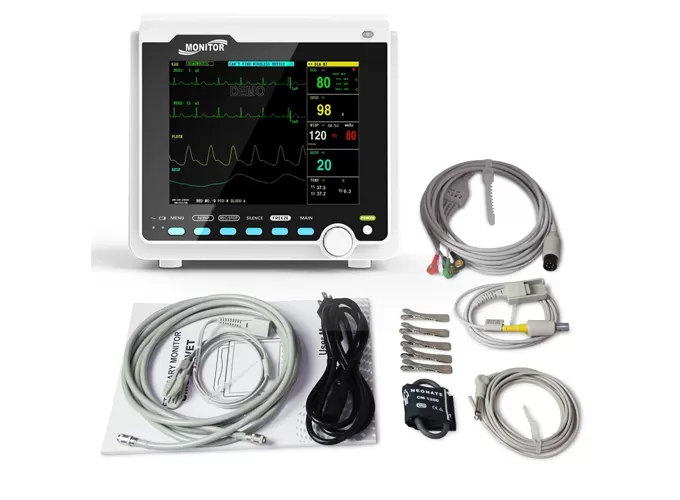
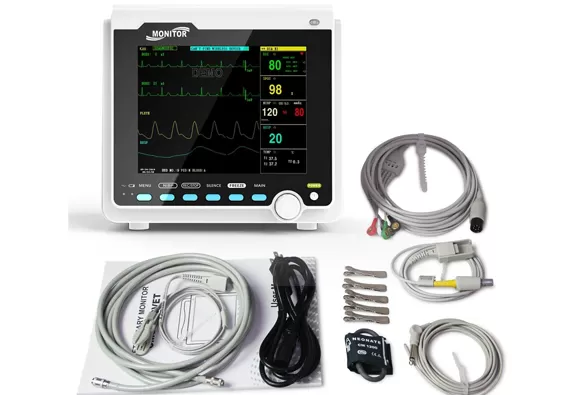
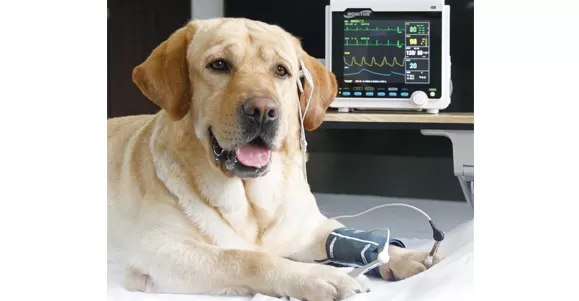
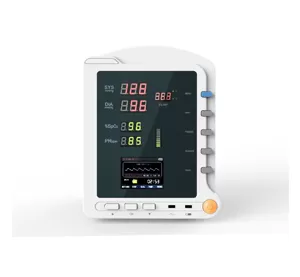
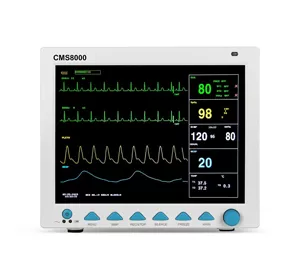
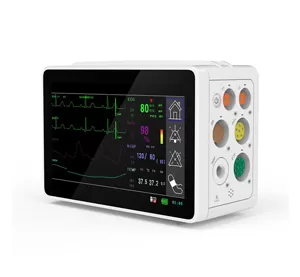


CMS6000VET is a high-performance monitor designed for cats, dogs and other animals. It integrates multi-parameter monitoring, portability and intelligent networking functions, and is suitable for veterinary surgery, intensive care and daily diagnosis and treatment.
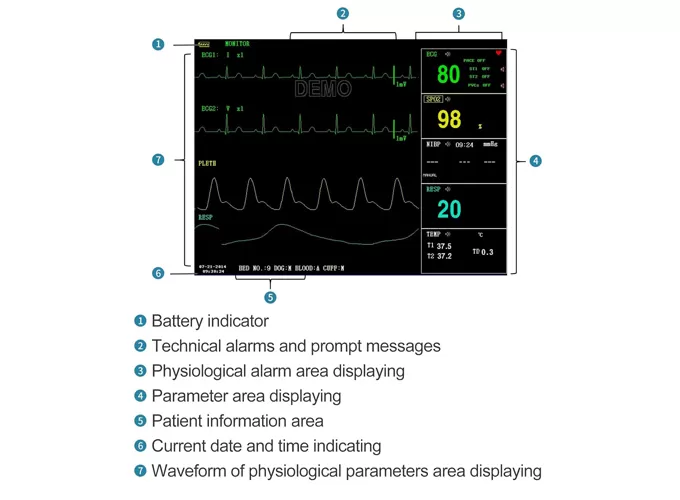
The device is equipped with an 8-inch TFT color LCD screen, supports 15 language interfaces, and can simultaneously display 8-channel waveforms and key life parameters, including electrocardiogram (ECG), respiration (RESP), blood oxygen (SpO₂), pulse (PR), non-invasive blood pressure (NIBP) and dual-channel body temperature (TEMP). It adopts digital blood oxygen technology to resist motion and weak perfusion interference to ensure accurate measurement.
It supports manual/automatic/static NIBP measurement, stores 4800 sets of blood pressure data, and records 71 alarm events and 60 arrhythmia events for retrospective analysis. The built-in 48mm thermal printer can print trend reports with one click, and has the function of drug concentration calculation to assist clinical decision-making.
The device supports WiFi, 3G, and wired networks to connect to the central monitoring system. It can be used in both AC and DC modes, and has a built-in battery to ensure continuous monitoring. The fanless and silent design reduces the risk of infection, prevents interference from high-frequency electric knives, and is suitable for surgical environments.
CMS6000VET provides reliable protection for animal medical care with precise monitoring, intelligent analysis, and portable design.
| Power | 100-240V~,50/60Hz |
| Parameters | ECG, RESP, SpO2, PR, NIBP ,TEMP |
| AC/DC | built-in rechargeable lithium battery |
| Screen | 8'' TFT color LCD Screen |
| Dimension | 235mm*41mm*222mm |
| Weight | 2.5 Kg |
| Safety classification | Class I, type CF defibrillation-proof applied part |
| Standard parameters: | ECG, RESP, SpO2, PR, NIBP, dual-channel TEMP |
| 1) | ECG Heart rate(HR) |
| 2) | RESP Respiration rate(RR) |
| 3) | SpO2 Oxygen saturation(SpO2) |
| 4) | NIBP Systolic pressure(SYS), Diastolic pressure(DIA), Mean pressure(MEAN) |
| 5) | TEMP T1, T2, TD |
It has abundant functions, such as audible and visual alarm, trend data storage and output, NIBP measurement, alarm event marking and drug concentration calculation, etc.
Professional-grade visual monitoring system
Equipped with an 8-inch TFT color LCD display, supporting 15 multi-language interfaces to meet international diagnosis and treatment needs.
A single screen can simultaneously display 8-channel waveforms and 7-lead ECG waveforms, support ECG step function, and provide a comprehensive monitoring perspective.
Supports custom settings for waveforms, parameter colors and positions, and provides multiple professional view modes such as OxyCRG, trend charts, and large characters.
Intelligent and accurate monitoring technology
Adopts advanced digital blood oxygen saturation technology, has excellent anti-motion and ambient light interference capabilities, and ensures measurement accuracy in weak perfusion environments.
Provides three NIBP measurement modes: manual/automatic/static, and can store 4,800 sets of blood pressure data to meet long-term monitoring needs.
With drug concentration calculation and titration table functions, it provides accurate reference for clinical medication.
Efficient and convenient operation Operation experience
Key and button dual operation modes, in line with clinical usage habits.
One-touch trend chart printing function, 48mm thermal printer quickly outputs key data.
Can record 131 alarm events (71 parameter alarms + 60 arrhythmias) to ensure safe diagnosis and treatment.
Reliable system design and connectivity
Fanless and silent design, energy-saving and environmentally friendly, effectively reducing the risk of cross-infection.
Support 3G/WiFi/wired three networking methods, easy access to the central monitoring system.
AC/DC dual power supply system, built-in rechargeable lithium battery to ensure continuous and uninterrupted monitoring.
Professional animal medical adaptability
Anti-high-frequency surgical interference design to ensure stable operation of the operating room environment.
Optional anti-defibrillation special wire to meet the needs of emergency scenarios.
Monitoring algorithm optimized for small animals to adapt to the diagnosis and treatment needs of animals of different sizes.
1. Power-on preparation
Connect the power adapter (100-240V~50/60Hz) or ensure that the built-in battery is fully charged
Press the power button to start the device and wait for the system self-test to complete
Select the operation interface language (supports 15 languages)
2. Device connection
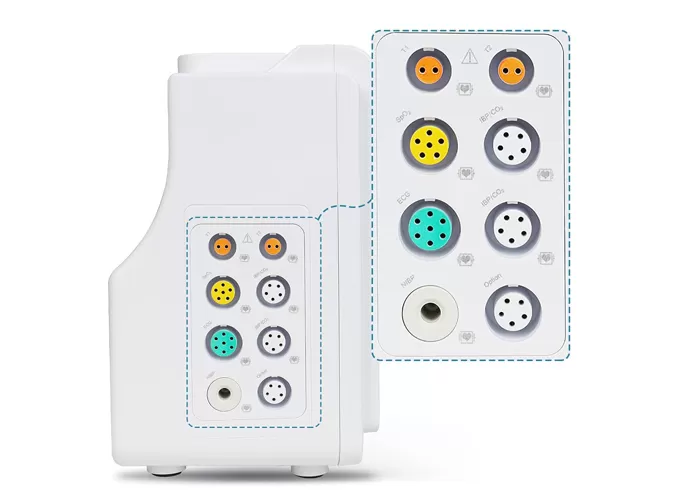
Connect the corresponding sensors according to monitoring needs:
Install the ECG lead wire (pay attention to the special requirements of the anti-defibrillation wire)
Connect the SpO₂ probe to the animal's tongue or auricle
Install the NIBP cuff (select a cuff suitable for the animal's body size)
Connect the body temperature probe (supports dual-channel measurement)
3. Parameter setting
Set monitoring parameters by pressing buttons:
Select the ECG lead mode (up to 7 leads)
Set the NIBP measurement mode (manual/automatic/static) and interval time
Adjust the alarm threshold (71 parameter alarms + 60 arrhythmia alarms)
4. Start monitoring
Confirm that all sensors are correctly connected and start real-time monitoring
Observe through the 8-inch color screen:
View 8-channel waveforms at the same time
Monitor vital parameters (ECG, SpO₂, NIBP, etc.)
Use professional viewing modes such as OxyCRG and trend charts
V. Data recording and analysis
View historical trend charts at any time (up to 72 hours)
Use the drug concentration calculation function to assist medication
Output 48mm thermal report through the one-key printing function
VI. Network operation (optional)
Connect to the central monitoring system via 3G/WiFi/wired network
Set data transmission parameters and storage options
VII. Shutdown process
Disconnect all sensors
Clean and disinfect contact parts
Press and hold the power button to turn off the device
If you need to use it on the move, you can switch to battery power mode
Precautions:
Turn on the anti-high-frequency interference mode when used in the operating room
Digital blood oxygen special mode needs to be enabled for weakly perfused animals
Regularly calibrate the sensor to ensure measurement accuracy
Pay attention to the power prompt when powered by lithium batteries
Surgery monitoring
Intensive care
Emergency rescue monitoring
Specialized diagnosis and treatment
Daily physical examination
Want to Get More Details About JCMED Medical Consumables?
We're waiting for your contact!