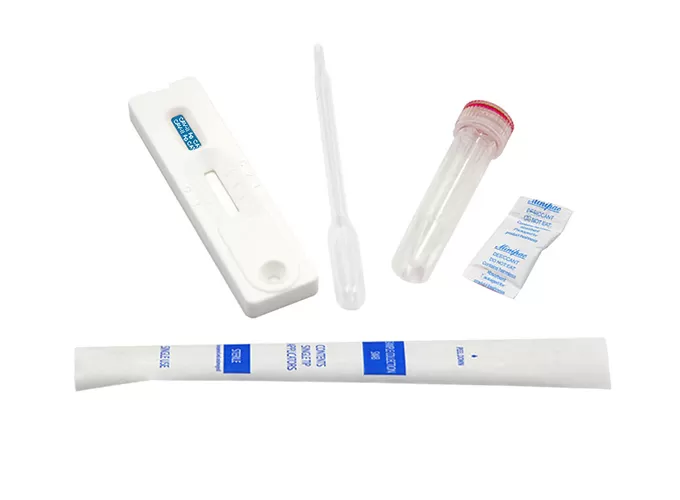
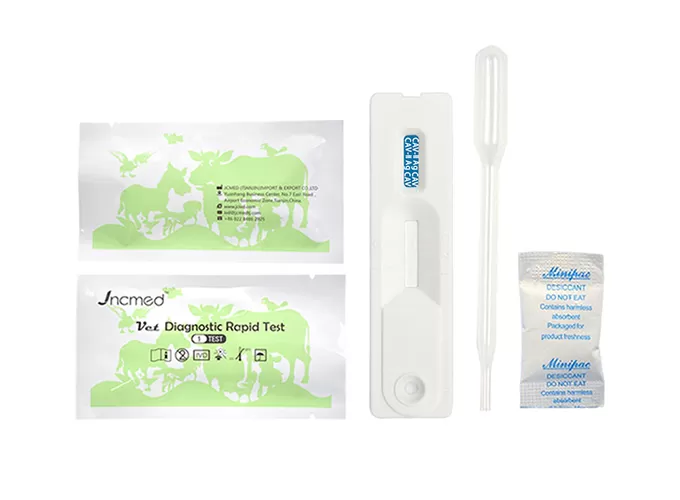
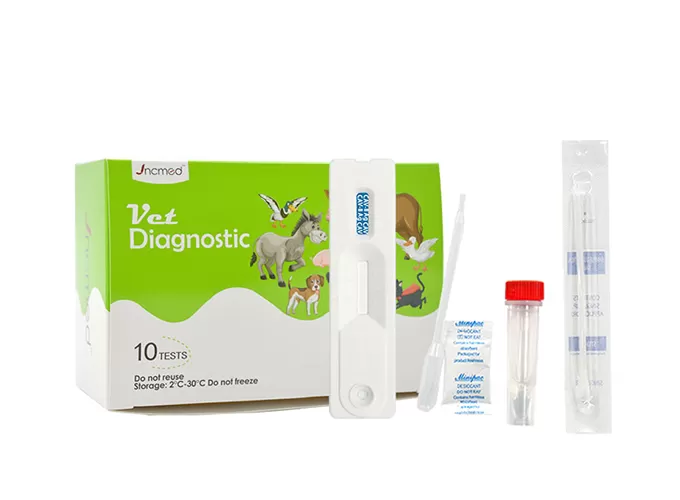
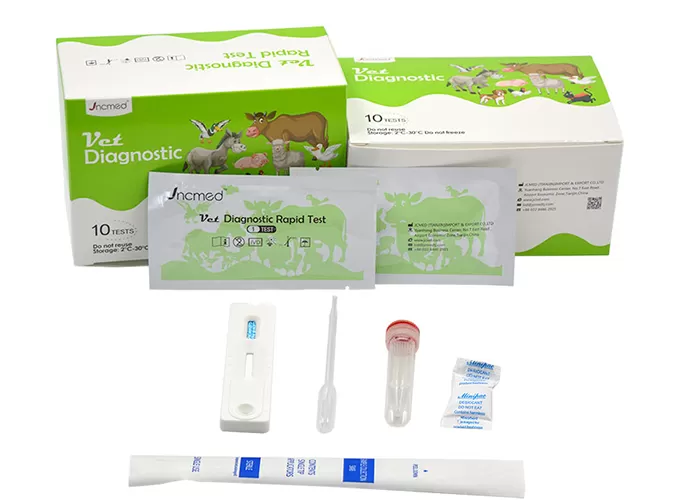
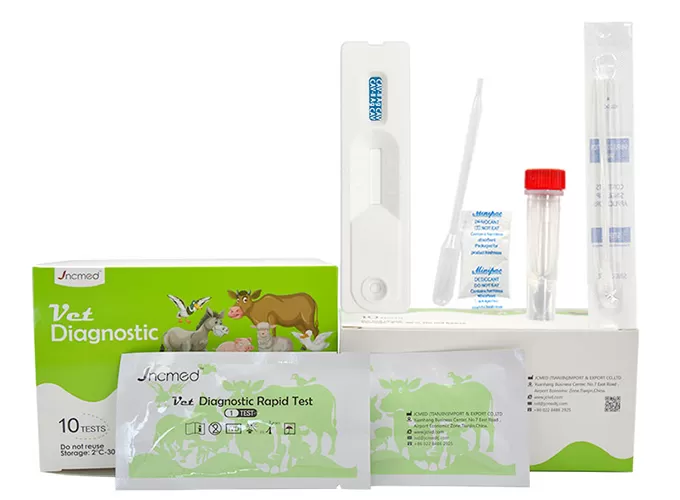
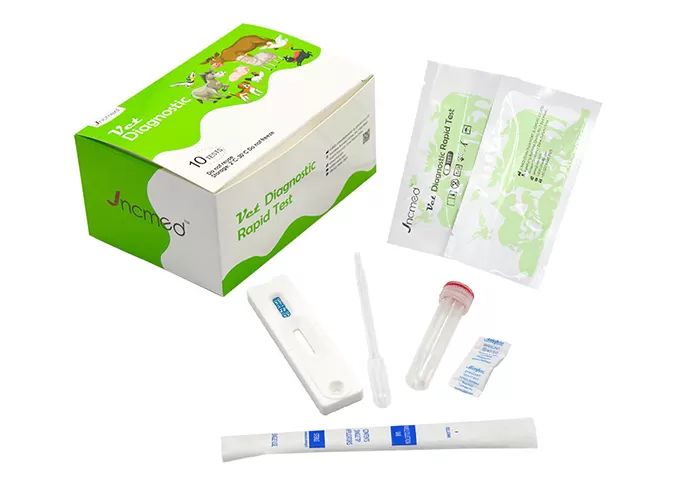
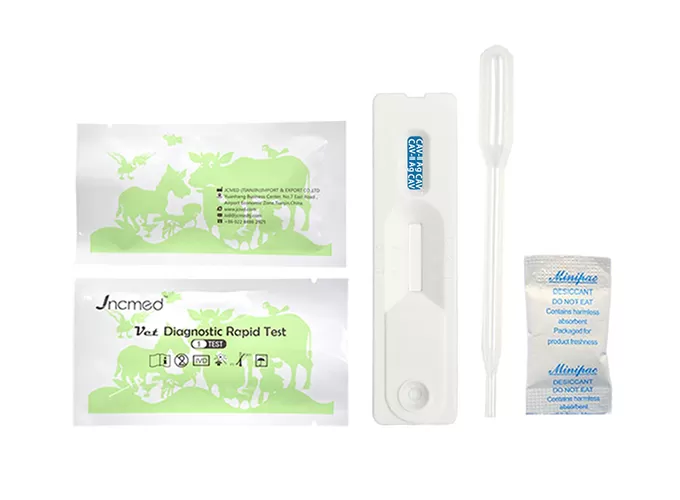
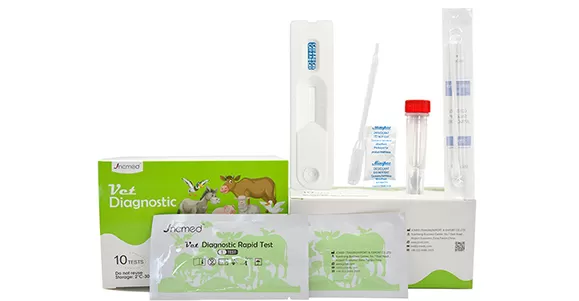
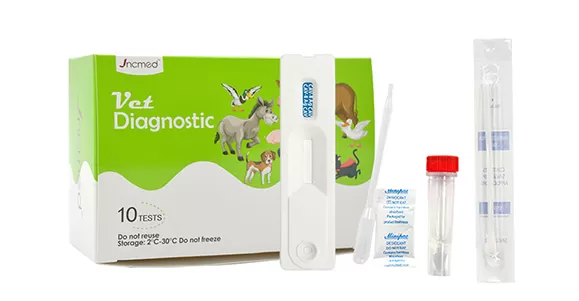
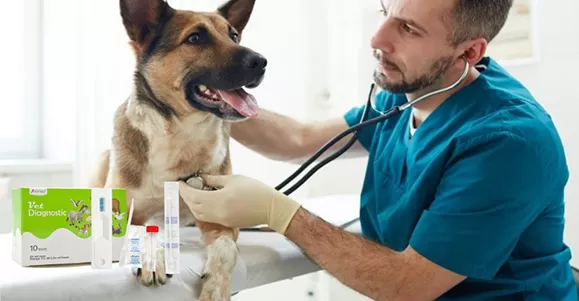
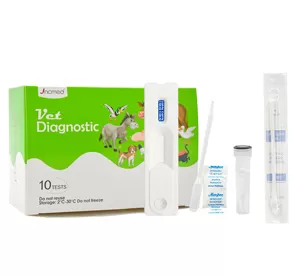
Canine adenovirus (CAV) is one of the most pathogenic mammalian adenoviruses, and is divided into two serotypes, type I and type II. Type I virus can cause canine infectious hepatitis, manifested as acute sepsis, central necrosis of liver lobule and intranuclear inclusion formation of hepatocytes, and can also cause fox encephalitis. Type II virus mainly causes canine infectious laryngotracheitis and enteritis. This test kit is designed for rapid screening of canine adenovirus infection and is suitable for detecting CAV antigens in canine eye secretions, nasal fluid, saliva and vomitus, helping veterinarians to diagnose and prevent diseases in a timely manner.
This kit is based on rapid immunochromatographic technology, which is easy to operate and can obtain results in a short time. During the test, just drop the sample into the test paper sample well, the sample will migrate along the chromatographic membrane and bind to the anti-CAV monoclonal antibody labeled with colloidal gold. If the sample contains CAV antigen, the test line will show a red strip, indicating a positive result; if there is no antigen, it will not show color and will be judged as negative. This method has high sensitivity and strong specificity, and is suitable for rapid detection in clinical sites.
The kit is suitable for veterinary clinics, pet hospitals and animal disease prevention and control institutions, and can effectively assist in the early screening and diagnosis of canine adenovirus infection. Rapid detection helps to take timely isolation and treatment measures, reduce virus transmission and protect the health of dogs.
| Principle | Lateral flow immunochromatography |
| Specimen | Secretions from dog's eyes, nasal cavities, and anus |
| Assay Time | 5-10 minutes |
| Accuracy | Over 99% |
| Storage | 2-30°C, NO FREEZE. |
| Shelf life | 18 months |

Instructions for use
Sample collection: Use a cotton swab to collect canine eye secretions, nasal fluid, saliva or vomit as the test sample.
Sample processing: Place the cotton swab in the diluent, stir and mix thoroughly, and let it stand for 1 minute to release the antigen.
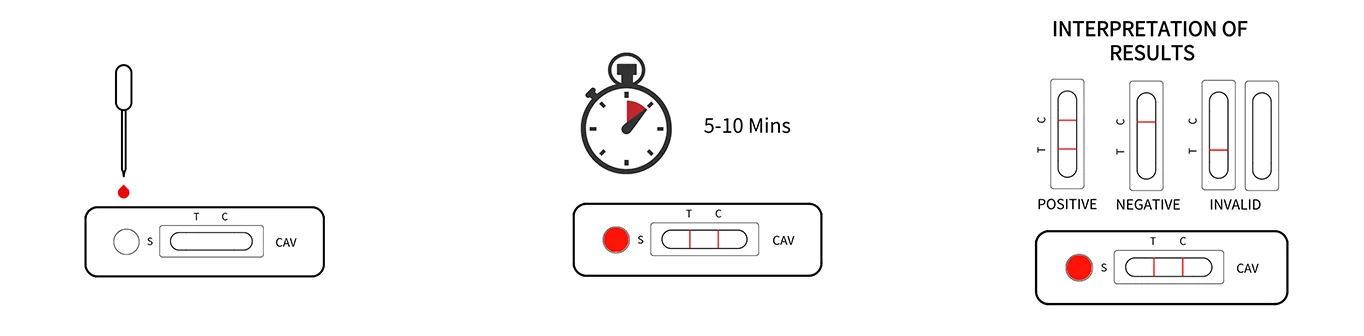
Drop sample: Vertically drip 3-4 drops of the treated sample solution into the sample well of the reagent card.
Start the test: Place the reagent card horizontally and wait for 10-15 minutes for the chromatography reaction to proceed fully.
Result interpretation: Observe whether red bands appear on the test line (T) and the quality control line (C).
Result judgment
Positive: Both the T line and the C line are colored, indicating that the sample contains CAV antigen.
Negative: Only the C line is colored and the T line is colorless, indicating that CAV antigen is not detected in the sample.
Invalid: If the C line is not colored, retesting is required regardless of whether the T line appears.
Fast and efficient: The test results can be obtained in 10-15 minutes, which is suitable for clinical rapid screening and emergency diagnosis needs.
Easy to operate: No professional equipment is required, just drop the sample to complete the test, which reduces the threshold for use.
High sensitivity: Colloidal gold immunochromatography technology is used to detect low-concentration antigens and improve the detection rate.
Strong specificity: Anti-CAV monoclonal antibodies accurately identify viral antigens, reduce cross-reactions, and the results are reliable.
Diverse samples: Support eye secretions, nasal fluids, saliva and vomitus detection to meet different clinical needs.
Economical and practical: Single independent packaging, low cost, suitable for large-scale screening and grassroots institutions.
Early diagnosis: Viral antigens can be detected in the early stage of infection, helping to intervene in time and reduce the risk of transmission.
Stable and reliable: The test kit is stored at room temperature, has a long shelf life, and is easy to transport and store.
Professional adaptation: Designed for veterinarians, suitable for pet hospitals, farms and animal epidemic prevention and control agencies.
Pet hospitals: assist veterinarians to quickly diagnose canine adenovirus infection and guide timely treatment.
Health screening of dogs in kennels and shelters: used for regular infectious disease monitoring in kennels, shelters and other places.
Vaccine effect evaluation: detect antigen levels after vaccination to evaluate the immune effect.
Grassroots epidemic prevention application: suitable for grassroots units without professional equipment to carry out CAV prevention and control work.
Want to Get More Details About JCMED Medical Consumables?
We're waiting for your contact!